
Articles
 Skin & Appearance
Skin Cancer: Warning Signs and How to Check Your Skin
Skin cancer is highly treatable when caught early, and a simple monthly self-check using a well-established visual checklist can catch changes worth showing a doctor long before they become dangerous.
Read more Skin & Appearance
Psoriasis Biologic Therapies
Biologic drugs have reshaped care for moderate-to-severe psoriasis by targeting the specific immune signals that drive flare-ups, rather than suppressing the whole immune system.
Read more Skin & Appearance
Isotretinoin (Accutane): Benefits and Risks
Isotretinoin is the only acne treatment capable of producing long-term remission rather than ongoing symptom control, but that power comes with a monitoring process unlike any other acne medication.
Read more Skin & Appearance
The Skincare and Lifestyle Habits That Secretly Trigger Adult Acne
Washing your face more often can sometimes make acne worse, not better — and a phone pressed against your cheek all day is a genuine, named dermatological cause of breakouts. Here's what's actually behind many adult acne patterns.
Read more Skin & Appearance
Living With Hyperhidrosis: Practical Management Beyond Medical Treatment
Medical treatment addresses the sweating itself, but day-to-day life with hyperhidrosis involves a separate set of practical decisions — including one surgical option with a trade-off most people never hear about until after considering it.
Read more Skin & Appearance
Excessive Sweating: Causes and Treatment Options
Excessive sweating without an obvious trigger is often a distinct medical condition, not a sign of nervousness or poor fitness. Here's the difference between its two main forms, and why treating it as "just anxiety" usually misses the actual mechanism.
Read more Skin & Appearance
Eczema: Triggers and Medical Therapies
Eczema isn't simply dry skin, and in many cases it isn't primarily an allergy either — it starts with a structurally weaker skin barrier that lets irritants in, which is what actually triggers the inflammation. That distinction changes how it's best treated.
Read more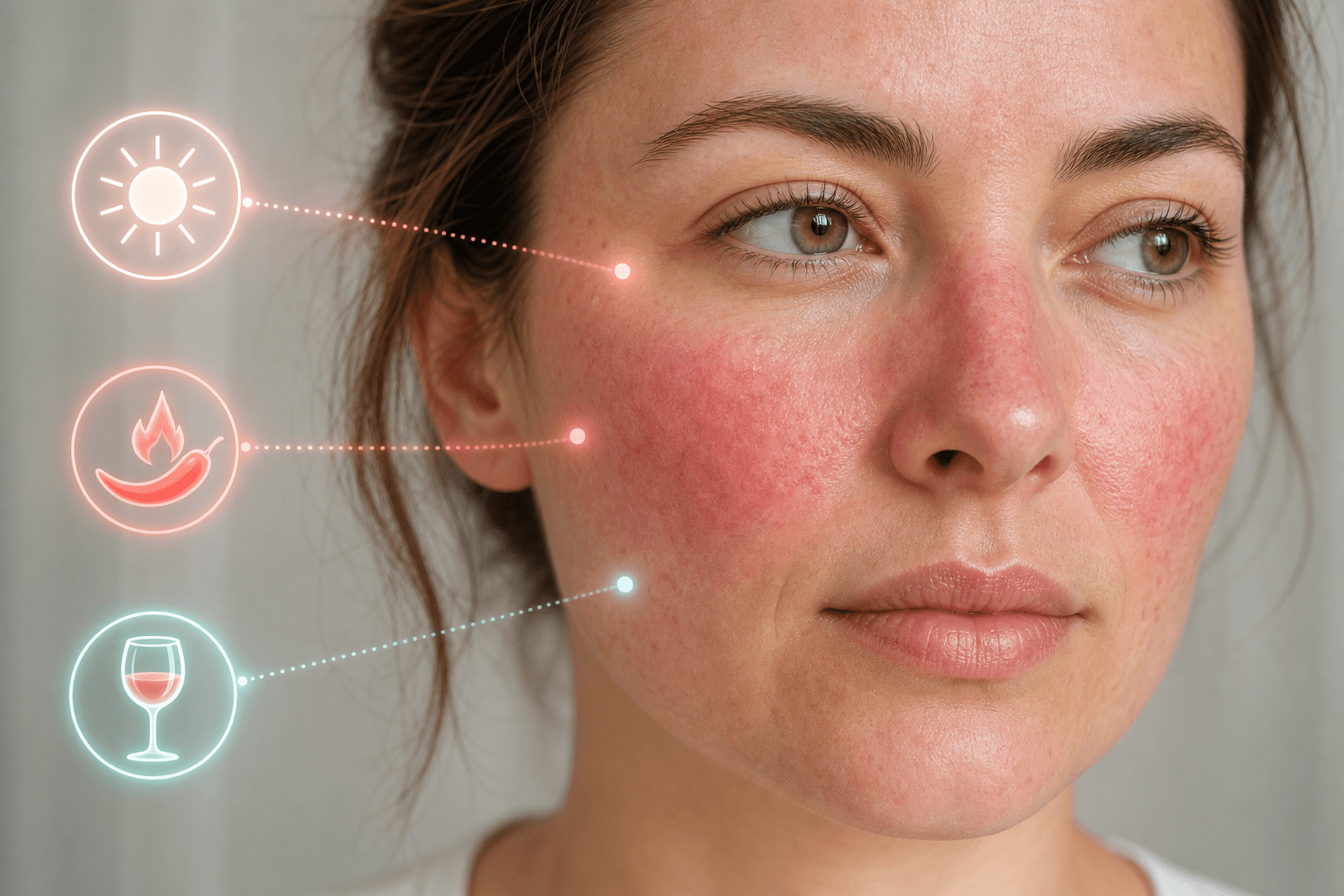 Skin & Appearance
Rosacea: Symptoms and Treatment
Rosacea is frequently mistaken for acne, sensitive skin, or simply blushing easily — often for years before it's properly identified. Treating it like acne, though, can actually make it worse, since it's a fundamentally different type of condition.
Read more Skin & Appearance
Adult Acne: Why It Keeps Coming Back
Adult acne often isn't leftover teenage acne at all — it frequently follows a distinct jawline pattern driven by hormonal fluctuation, which is exactly why it tends to flare on a monthly cycle and resist typical over-the-counter treatment.
Read more Skin & Appearance
Hair Loss: Causes and Treatment Options
Hair loss often shows up two to three months after whatever actually triggered it — a delay that explains why so many people can't identify a clear cause. Here's how the hair growth cycle explains that gap, and what the evidence actually supports for treatment.
Read more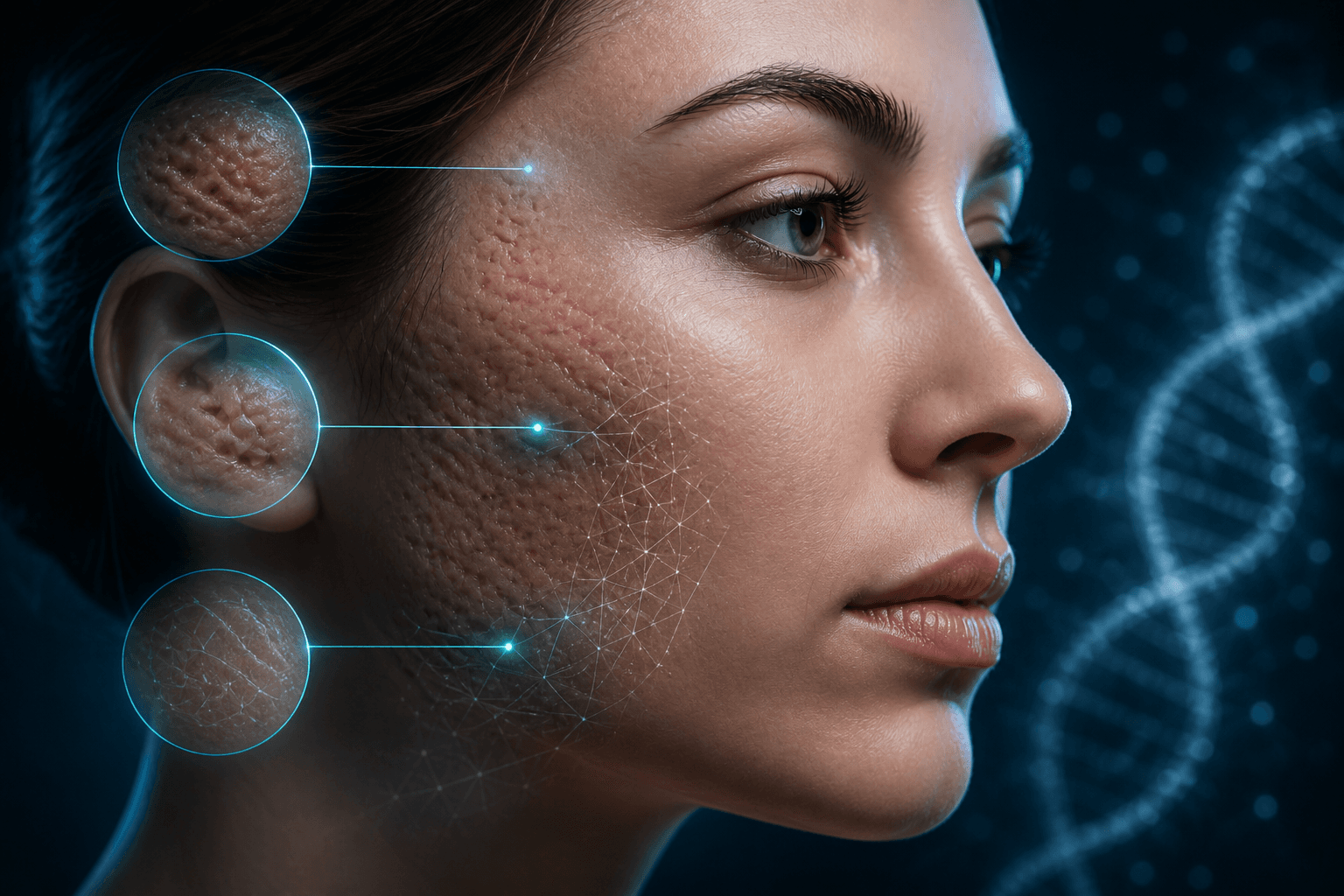 Skin & Appearance
Acne Scars: Why They Form and What Actually Works to Fade Them
Acne scarring follows a predictable biological pattern. Here's what actually determines whether a breakout scars, and which treatments match each scar type.
Read more