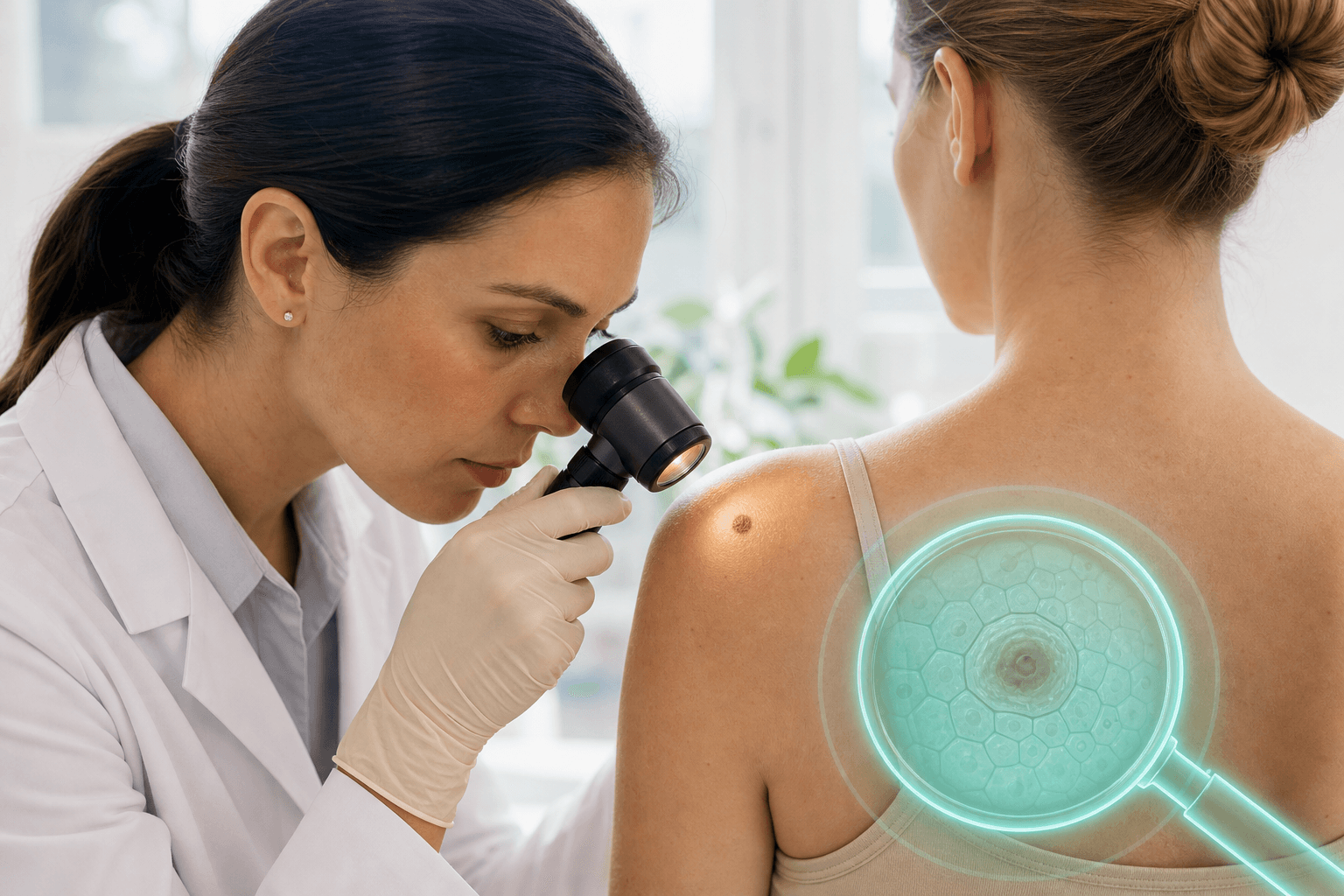
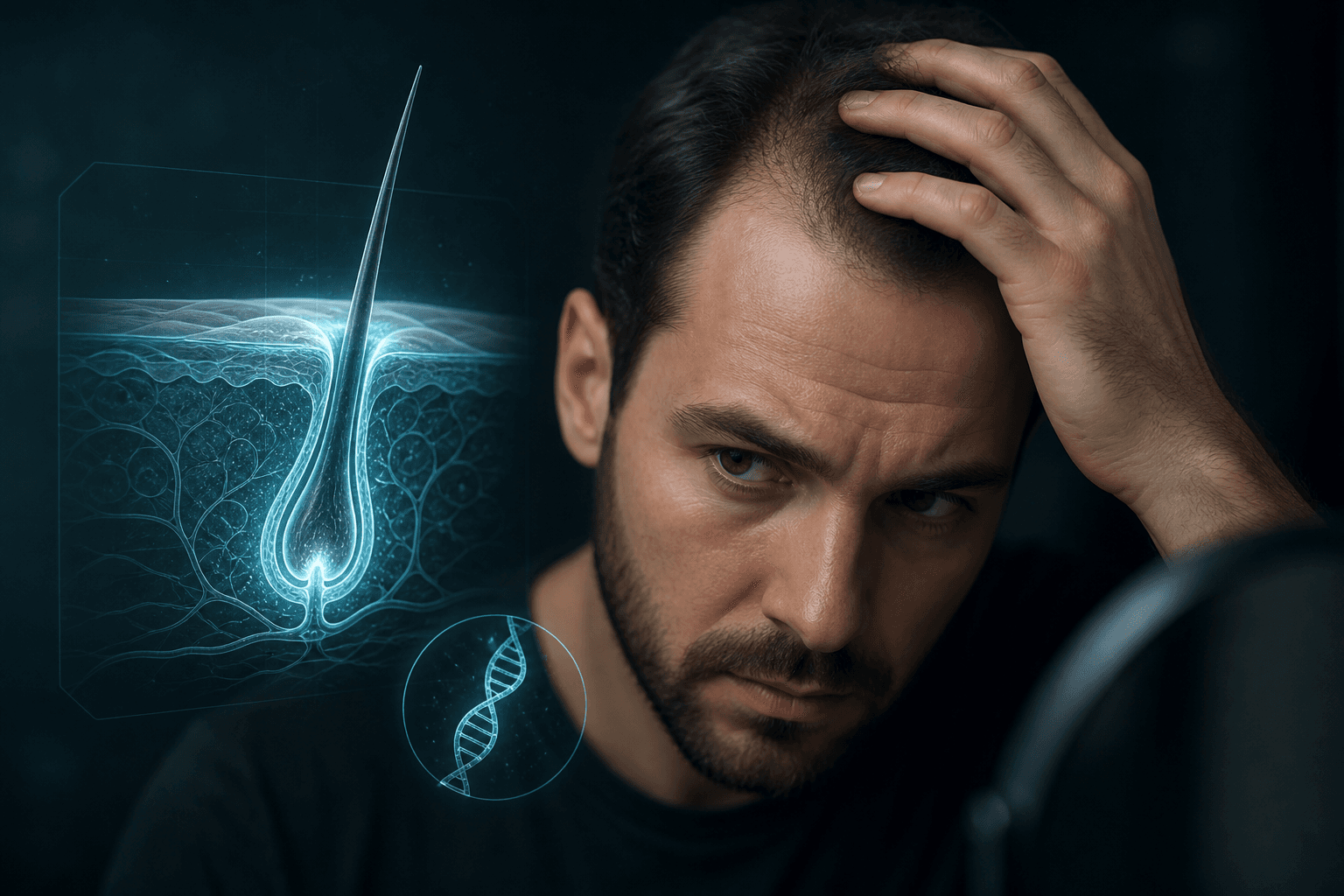
Hair loss often shows up two to three months after whatever actually triggered it — a delay that explains why so many people can't identify a clear cause. Here's how the hair growth cycle explains that gap, and what the evidence actually supports for treatment.
One of the most common sources of confusion around hair loss is timing: someone notices significant shedding and tries to recall what happened recently, but the actual trigger — an illness, a crash diet, a stressful period, childbirth — often happened two to three months earlier, not right before the shedding started. This delay isn't random. It's a direct consequence of how the hair growth cycle works.
The Hair Growth Cycle Explains a Lot
Each hair follicle cycles through distinct phases: a growth phase (anagen) lasting anywhere from two to seven years, a brief transitional phase (catagen), and a resting phase (telogen) lasting roughly three months, after which the hair sheds and a new growth cycle begins. At any given time, around 10% of hair is normally in the telogen phase — which is why losing 50 to 100 hairs a day is considered entirely normal.
Why Shedding Often Appears Months After the Actual Trigger
A significant physical or emotional stressor — illness, major weight loss, childbirth, surgery, extreme stress — can push a much larger-than-usual proportion of follicles into the telogen phase all at once. Because telogen lasts around three months before those hairs actually shed, the visible increase in hair loss doesn't appear until roughly two to three months after the triggering event, by which point the connection is easy to miss entirely. This pattern, called telogen effluvium, is usually temporary, with growth typically resuming once the underlying trigger has resolved and the disrupted follicles cycle back into their normal growth phase.
Telogen Effluvium vs. Androgenetic (Pattern) Hair Loss
Telogen effluvium causes diffuse, all-over thinning and is generally temporary. Androgenetic alopecia — pattern hair loss — is a different, typically progressive process that follows a recognizable pattern: receding at the temples and thinning at the crown in men, and more diffuse thinning along the part line in women. Distinguishing between the two matters considerably, since one usually resolves on its own once the trigger passes, while the other tends to continue progressing without treatment.
The Hormonal Mechanism Behind Pattern Hair Loss
Androgenetic alopecia is driven by dihydrotestosterone (DHT), a hormone derived from testosterone that binds to receptors in genetically susceptible hair follicles, gradually shrinking them over successive growth cycles in a process called miniaturization. Importantly, this is generally about genetic sensitivity to DHT at the follicle level, not necessarily about having unusually high testosterone or DHT levels overall — which is why pattern hair loss can occur in people with entirely normal hormone levels, simply because their follicles are more genetically responsive to a normal amount of DHT.
Other Causes Worth Ruling Out
- Thyroid dysfunction, both underactive and overactive, is a well-documented cause of diffuse hair thinning.
- Iron deficiency, particularly relevant for women, is associated with increased shedding even without full-blown anemia.
- Alopecia areata, an autoimmune condition, causes distinct, well-defined round patches of hair loss rather than diffuse thinning or a typical pattern distribution.
- Certain medications, including some used for blood pressure, mood, and other conditions, list hair thinning as a recognized side effect.
Evidence-Based Treatment Options
- Minoxidil, applied topically, works by prolonging the growth (anagen) phase and is available without a prescription in many places; it's effective for both pattern hair loss and, in some cases, supports faster recovery from telogen effluvium.
- Finasteride, taken orally, works by blocking the conversion of testosterone into DHT, directly addressing the mechanism behind androgenetic alopecia specifically — a prescription medication requiring individual assessment of suitability.
- Low-level laser therapy devices have shown modest supporting evidence for improving hair density in pattern hair loss, generally used alongside other treatments rather than in place of them.
- Correcting an identified underlying cause — such as a thyroid imbalance or iron deficiency — often resolves shedding tied to that specific cause without any hair-focused treatment being necessary at all.
Continue reading for free
Create a free account to keep reading — and connect with our trusted partner's licensed doctors whenever you need more than information.
Already have an account?