Eczema isn't simply dry skin, and in many cases it isn't primarily an allergy either — it starts with a structurally weaker skin barrier that lets irritants in, which is what actually triggers the inflammation. That distinction changes how it's best treated.
Eczema (atopic dermatitis) is often described as simply having very dry, sensitive skin, or as a straightforward allergic reaction. Neither framing fully captures what's actually happening. For many people with eczema, the starting point is a structurally weaker skin barrier — and it's the consequences of that weaker barrier, more than an external allergy on its own, that set off the inflammatory response.
The Skin Barrier, Explained
Healthy skin relies on a tightly organized outer layer of cells held together by lipids and structural proteins — filaggrin being one of the most important — that together keep moisture in and irritants, allergens, and microbes out. In many people with eczema, a genetic variation affecting filaggrin production results in a measurably weaker barrier from the start, one that loses moisture more easily and offers less resistance to substances that would otherwise be kept out.
Why a Broken Barrier Causes the Immune Response
This is the part that reframes the condition significantly: rather than an allergy triggering skin damage from the inside, the sequence in eczema often runs the other way. A compromised barrier allows allergens, irritants, and microbes to penetrate more easily from the outside, and it's that penetration that provokes the immune system's inflammatory response — redness, itching, and the characteristic rash. This "outside-in" model is a meaningful part of why simply avoiding suspected allergens often isn't enough on its own; the barrier itself needs direct attention.
The Itch-Scratch Cycle
Once itching starts, scratching provides temporary relief but further damages the already weakened barrier and releases additional inflammatory signals in the skin, which intensifies the itch further — a self-perpetuating cycle that can turn a mild flare into a more significant one, independent of whatever originally triggered it. Interrupting this cycle (through treatment that reduces itch directly, alongside barrier repair) is often as important as addressing the original trigger.
The Atopic Triad
Eczema frequently clusters with asthma and allergic rhinitis (hay fever) — sometimes referred to together as the atopic triad — reflecting a shared underlying tendency toward this type of immune response across different tissues. Having one of the three doesn't guarantee the others will develop, but the association is well documented and sometimes explains a broader pattern of allergic-type conditions within the same person or family.
Common Triggers
- Harsh soaps and detergents strip the skin's already limited protective lipids further.
- Wool and synthetic fabrics can mechanically irritate compromised skin.
- Extreme temperatures and sweating frequently trigger flares, particularly rapid temperature changes.
- Stress has a measurable effect on flare frequency and severity, likely through its broader effect on immune activity.
- Hard water, an often-overlooked factor, has been associated with increased eczema severity in some studies, possibly related to mineral deposits affecting the skin surface and interacting with soap residue.
- In some children specifically, certain foods can be a genuine trigger, though this is considerably less common as a primary driver in adult eczema.
Treatment Starts With Repairing the Barrier
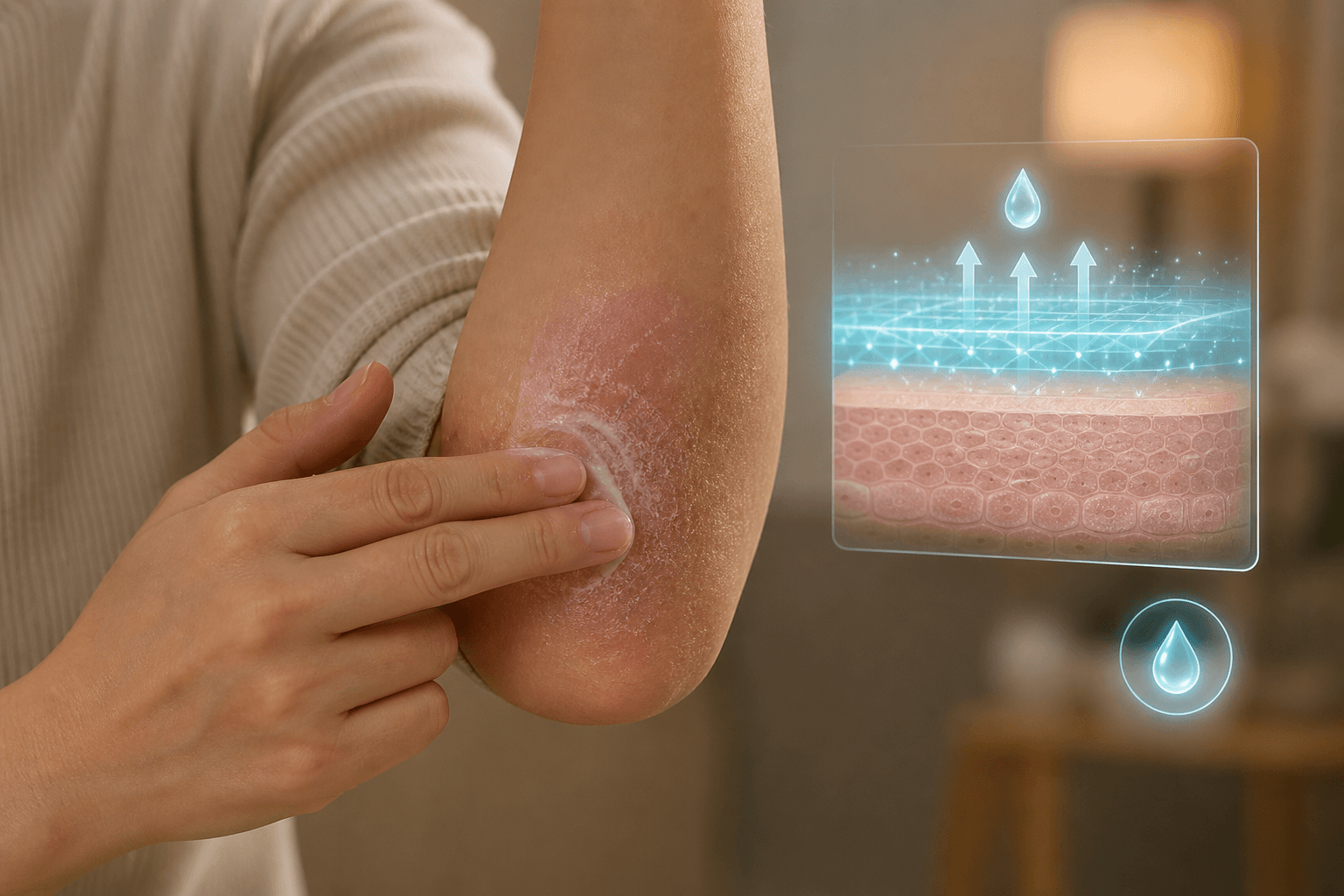
Moisturizing in eczema isn't just about comfort — it's a core part of treatment, since restoring the barrier directly reduces how easily irritants and allergens penetrate the skin. Moisturizers containing ceramides specifically are often recommended, since ceramides are one of the key lipid components measurably reduced in eczema-affected skin. A technique often called "soak and seal" — applying moisturizer to slightly damp skin right after bathing — helps lock in moisture more effectively than applying to dry skin.
Medical Therapies Beyond Moisturizer
- Topical corticosteroids remain a mainstay for active flares, reducing inflammation directly. Used appropriately, under medical guidance regarding strength and duration, they are considered safe and effective — a point worth emphasizing given how much unfounded "steroid phobia" circulates and leads some people to undertreat flares unnecessarily.
- Topical calcineurin inhibitors offer a non-steroid option, particularly useful for sensitive areas like the face and for longer-term use where repeated steroid courses would otherwise be needed.
- Newer biologic medications, which target specific inflammatory signaling pathways involved in eczema, have become available for moderate-to-severe cases that don't respond adequately to topical treatment, representing a meaningfully different approach from earlier systemic options.
- Phototherapy (controlled UV light exposure) is another option for more widespread or treatment-resistant cases.
Continue reading for free
Create a free account to keep reading — and connect with our trusted partner's licensed doctors whenever you need more than information.
Already have an account?