Rosacea is frequently mistaken for acne, sensitive skin, or simply blushing easily — often for years before it's properly identified. Treating it like acne, though, can actually make it worse, since it's a fundamentally different type of condition.
Rosacea has a habit of being misunderstood for years before it's properly identified — dismissed as simply having sensitive skin, blushing easily, an allergic reaction to something in a skincare routine, or, most commonly, mistaken for acne. That last confusion matters more than it might seem, because treating rosacea with typical acne products often makes it noticeably worse.
A Vascular and Inflammatory Condition, Not an Oil Problem
Acne originates from clogged pores and bacterial overgrowth within hair follicles. Rosacea is a fundamentally different process, centered on abnormal blood vessel dilation in the facial skin combined with an overactive immune and inflammatory response. This distinction isn't just academic — it directly explains why rosacea looks different, behaves differently, and needs a different treatment approach entirely.
The Four Recognized Subtypes
- Erythematotelangiectatic rosacea — persistent facial redness with visible small blood vessels, often with a tendency to flush easily.
- Papulopustular rosacea — small red bumps and pustules that resemble acne closely enough to be the most commonly confused subtype.
- Phymatous rosacea — skin thickening, most recognizably affecting the nose (rhinophyma), developing gradually over time in more advanced or long-standing cases.
- Ocular rosacea — involvement of the eyes, causing dryness, irritation, and a gritty sensation, and frequently overlooked since it doesn't always coincide obviously with visible skin symptoms.
Common Triggers
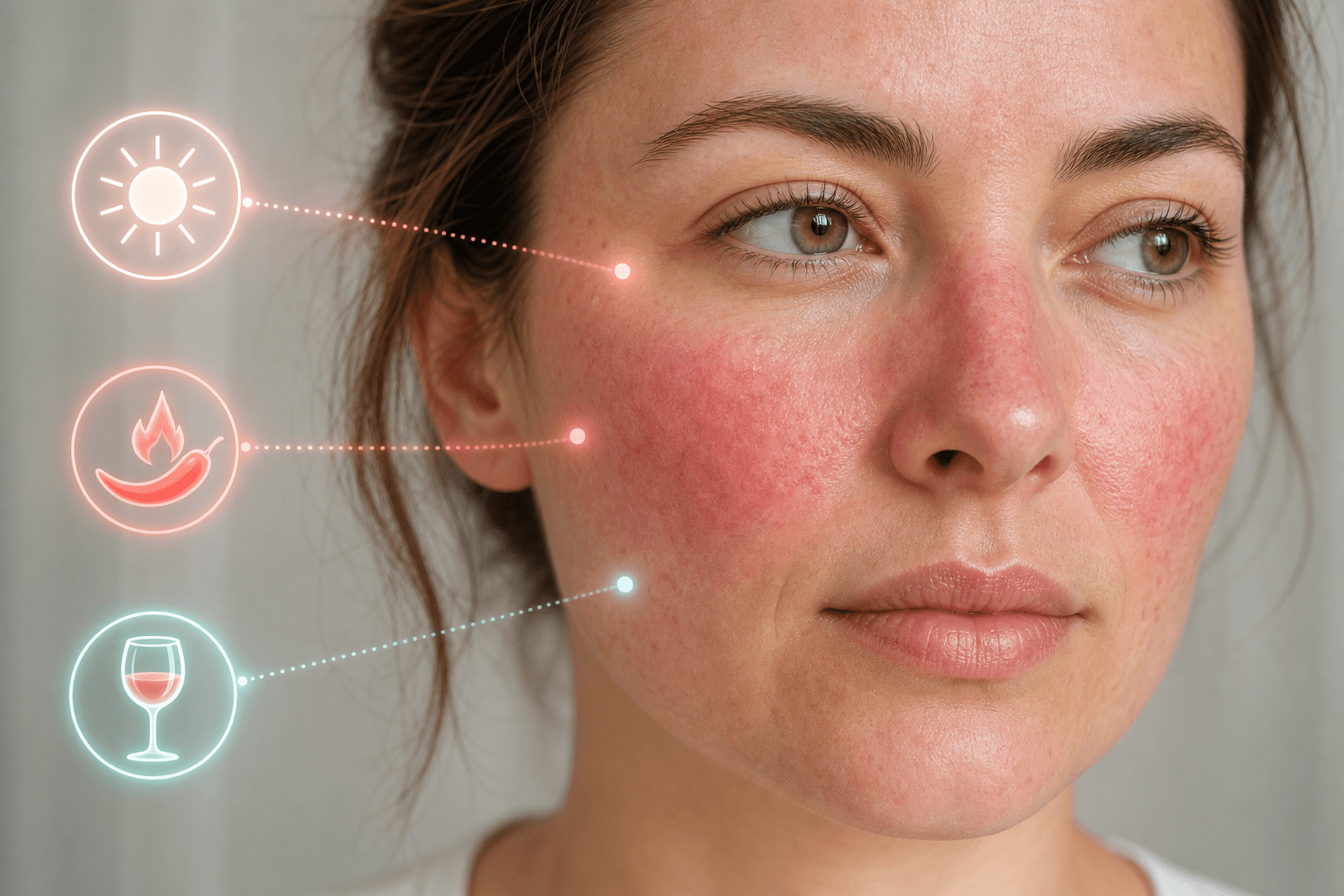
Rosacea flares are highly individual, but several triggers appear repeatedly across most people affected: heat and hot environments, spicy food, alcohol (red wine in particular), prolonged sun exposure, emotional stress, hot beverages, and certain skincare ingredients — particularly alcohol-based or heavily fragranced products. The specific combination of triggers tends to vary meaningfully from person to person, which is part of what makes managing rosacea feel like a personal puzzle rather than following a single universal set of rules.
Why Treating It Like Acne Often Makes It Worse
Because papulopustular rosacea can resemble acne, it's common for people to reach for benzoyl peroxide, harsh exfoliating scrubs, or alcohol-based astringents — all reasonable choices for acne, but all likely to irritate rosacea further, since the underlying issue is inflammatory and vascular rather than related to clogged pores. This mismatch is one of the more common reasons rosacea seems to resist treatment: the treatment itself is often the wrong one for the actual mechanism involved.
The Ocular Subtype People Often Miss Entirely
Dry, irritated, red, or gritty-feeling eyes can be an underrecognized presentation of rosacea, sometimes appearing before any skin symptoms are obvious. Left unaddressed, ocular rosacea can occasionally progress to more significant eye surface complications, which is why any eye irritation occurring alongside facial redness or flushing is worth mentioning specifically when discussing symptoms with a doctor, rather than treating it as an unrelated, separate issue.
Treatment Approaches Matched to Subtype
- Topical metronidazole, azelaic acid, or ivermectin cream are commonly used for the inflammatory bumps of papulopustular rosacea, targeting inflammation rather than acting like standard acne treatment.
- Low-dose oral antibiotics are sometimes prescribed for rosacea specifically for their anti-inflammatory effect at that dose, rather than primarily for an antibacterial effect — a distinct rationale from how antibiotics are used for a bacterial infection.
- Laser or light-based treatments can meaningfully reduce visible blood vessels and persistent redness associated with the erythematotelangiectatic subtype.
- Consistent gentle skincare and daily sunscreen reduce flare frequency across all subtypes, given how commonly sun exposure and irritating products act as triggers.
- Lid hygiene and artificial tears, sometimes alongside a prescribed treatment, address the ocular subtype specifically.
Identifying and Managing Personal Triggers
Because triggers vary so much between individuals, a simple flare diary — noting food, drink, weather, stress levels, and products used in the day or two before a flare — is one of the most useful tools for identifying an individual's specific pattern, which then allows for targeted avoidance rather than broad, often unnecessary restriction.
Continue reading for free
Create a free account to keep reading — and connect with our trusted partner's licensed doctors whenever you need more than information.
Already have an account?