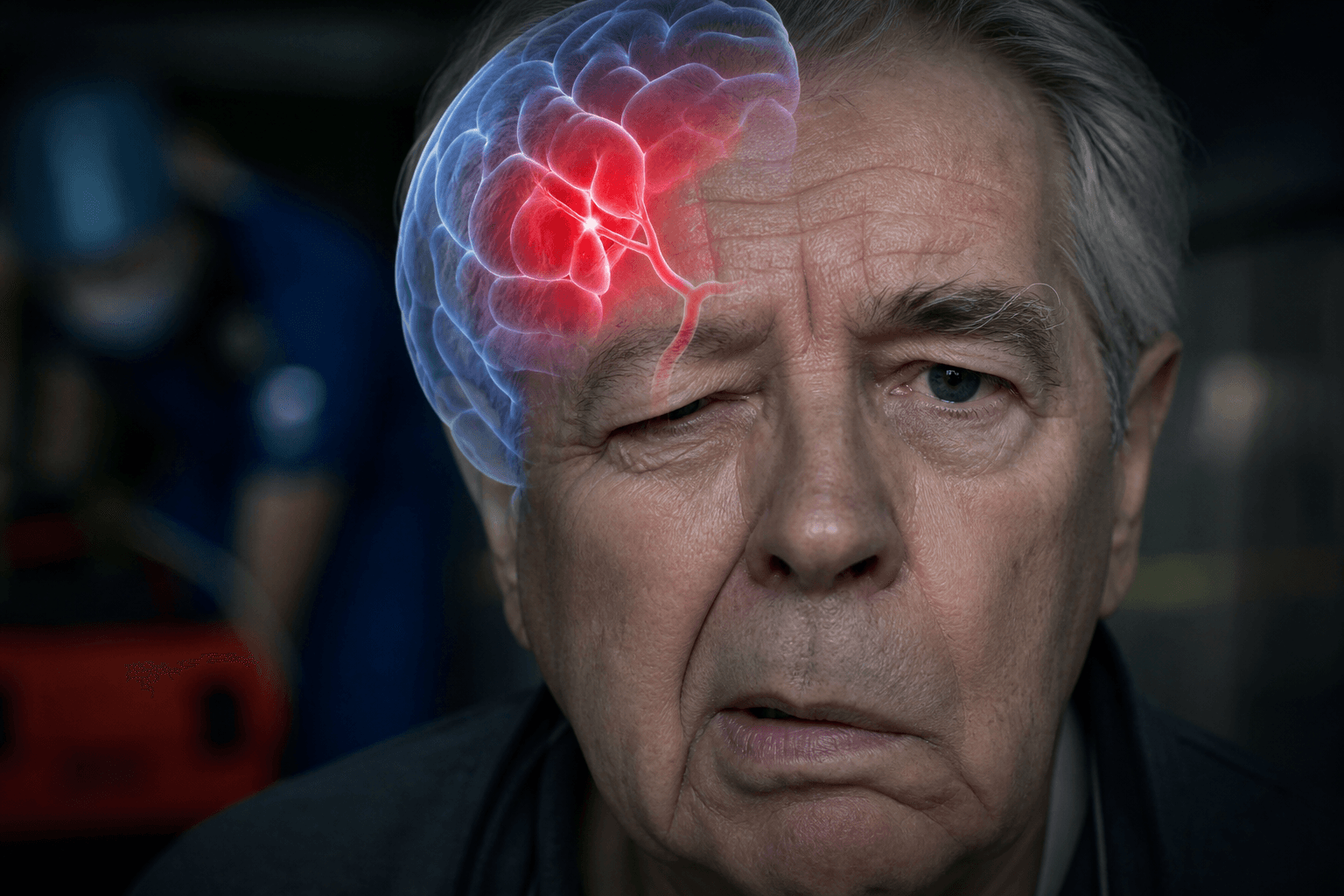
Recognizing a stroke within seconds using the simple FAST method can be the difference between a good recovery and lasting disability, since stroke treatments are highly time-sensitive.
Stroke is a leading cause of long-term disability, yet the difference between a good and a poor recovery often comes down to a single variable that has nothing to do with the severity of the stroke itself: how quickly it's recognised and treated.
Why Every Minute Counts With Stroke
During an ischaemic stroke — the most common type — a blocked blood vessel cuts off blood supply to part of the brain, and brain cells in the affected area begin dying at a rapid rate without treatment. Treatments that can dissolve a clot or physically remove it are time-sensitive, generally most effective within a narrow window from when symptoms start, which is why recognising the signs immediately, rather than waiting to see if they pass, has such a direct impact on outcomes.
The FAST Acronym: A Simple Way to Recognise the Signs
FAST was designed specifically so that stroke recognition doesn't depend on medical training. Face refers to sudden weakness or drooping on one side of the face, often most visible when asking someone to smile. Arms refers to sudden weakness or numbness in one arm, typically tested by asking someone to raise both arms and watching whether one drifts downward. Speech refers to sudden slurred, garbled, or difficult-to-produce speech, or difficulty understanding what others are saying. Time is the final and arguably most important letter: if any of these signs are present, the appropriate action is to note the time they started and call emergency services immediately, rather than waiting to see whether they improve.
Other Symptoms That Can Appear Alongside or Instead
While FAST captures the most common and recognisable stroke signs, other symptoms can occur as well, including sudden severe headache with no clear cause, sudden vision loss or double vision in one or both eyes, sudden dizziness or loss of balance and coordination, and sudden confusion. These symptoms are generally treated with the same urgency as classic FAST symptoms when they appear suddenly and without an obvious explanation.
Why Acting Immediately Matters More Than Waiting to Be Certain
A common and understandable instinct is to wait a few minutes to see whether symptoms pass before deciding whether they're serious enough to act on. With stroke, this hesitation works directly against the person experiencing it, since treatment effectiveness is closely tied to how quickly it begins. Symptoms that resolve on their own within a short period can also indicate a transient ischaemic attack (TIA) — sometimes called a mini-stroke — which is itself treated as a medical emergency and a strong warning sign for a larger stroke that may follow, so resolution of symptoms is not a reason to avoid seeking emergency care.
What Happens After Calling Emergency Services
Emergency medical teams are trained to prioritise suspected stroke calls and can begin initial assessment before arrival at hospital, where rapid brain imaging is used to determine the type of stroke and the most appropriate treatment. This is part of why calling emergency services directly, rather than arranging transport independently, generally leads to faster treatment: it activates a system built specifically around minimising delay for a condition where delay has an outsized cost.
If You Notice These Signs
Important
If you or someone near you shows any sign of Face drooping, Arm weakness, or Speech difficulty, call emergency services immediately and note the time symptoms started — do not wait to see if they improve, and do not attempt to drive the person to hospital yourself.
Rapid emergency response is a core part of how stroke treatment works, and acting immediately gives the best chance of an effective outcome.