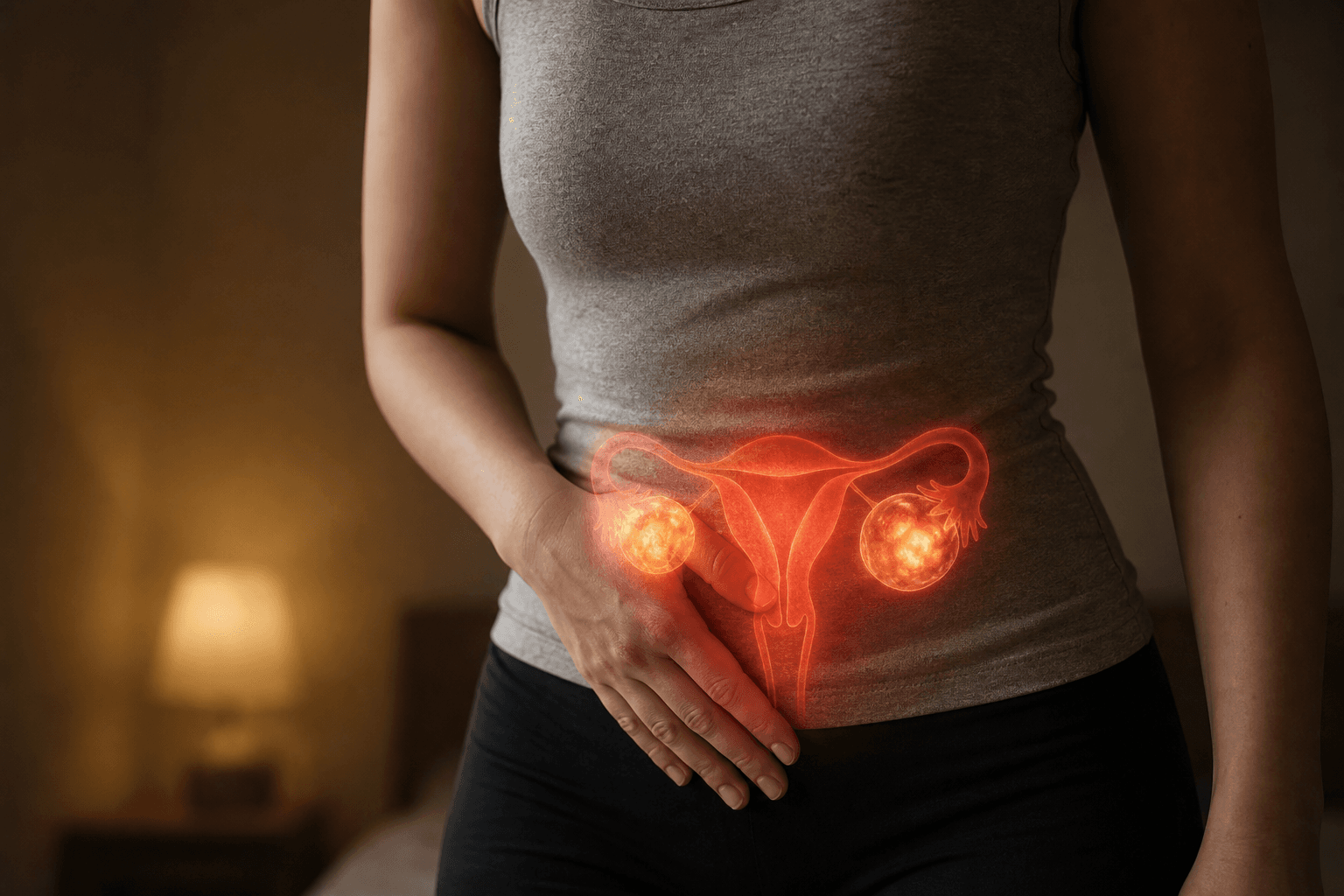
PCOS affects roughly one in ten women of reproductive age, yet its hormonal and metabolic roots extend well beyond irregular periods — understanding the mechanism explains why treatment looks different for everyone.
Despite its name, polycystic ovary syndrome doesn't actually require the presence of cysts on the ovaries at all — the term describes a hormonal and metabolic condition affecting an estimated one in ten women of reproductive age, built on a set of underlying mechanisms that extend well beyond the ovaries themselves.
What PCOS Actually Involves — Beyond the Name
The "polycystic" in PCOS refers to the appearance the ovaries can have on ultrasound — multiple small, immature follicles rather than true cysts — but this finding is neither required nor sufficient for a diagnosis on its own. PCOS is better understood as a hormonal and metabolic condition involving elevated androgen (male hormone) levels, irregular ovulation, and, in many cases, insulin resistance, all of which interact with one another rather than existing as separate, unrelated problems.
Why Insulin Resistance Is Central to Many Cases
A large proportion of people with PCOS have some degree of insulin resistance, meaning the body's cells respond less effectively to insulin and the pancreas compensates by producing more of it. This matters beyond blood sugar control specifically, because elevated insulin levels are thought to directly stimulate the ovaries to produce more androgens, which in turn interferes with normal ovulation. This is part of why weight and metabolic health are so closely tied to symptom severity for many individuals with PCOS, even though the condition itself is not caused by weight and affects people across the weight spectrum.
Common Symptoms and Why They Vary So Much Between Individuals
Because PCOS involves several interacting hormonal pathways, its presentation varies considerably from person to person. Irregular or absent periods are among the most consistent features, reflecting inconsistent ovulation. Elevated androgen levels can produce visible signs such as excess facial or body hair growth, acne, and, in some cases, thinning scalp hair. Difficulty losing weight and fatigue are also commonly reported, though these are less specific and can have several other explanations, which is part of why a proper diagnostic process matters rather than self-diagnosing from a list of symptoms.
How PCOS Is Diagnosed
Diagnosis generally relies on meeting at least two of three recognised criteria: irregular or absent ovulation, clinical or blood-test evidence of elevated androgens, and the characteristic ovarian appearance on ultrasound. Because no single test confirms PCOS on its own, and because other conditions can produce similar symptoms, a doctor typically also runs blood tests to rule out thyroid dysfunction and other hormonal conditions that can mimic aspects of PCOS before settling on the diagnosis.
Long-Term Health Considerations Beyond Fertility
PCOS is often discussed primarily in relation to fertility, but its metabolic dimension carries longer-term relevance as well. The same insulin resistance associated with PCOS is linked to a higher long-term likelihood of developing type 2 diabetes, and PCOS is also associated with a higher likelihood of elevated cholesterol and blood pressure over time. This is why management of PCOS is generally framed around overall metabolic health, not solely around menstrual regularity or fertility planning, even for those not currently trying to conceive.
Treatment Approaches: Managing, Not Curing
There is currently no cure for PCOS, and treatment is generally tailored to whichever symptoms matter most for a given individual at a given time. For those not seeking pregnancy, hormonal contraception is often used to regulate cycles and reduce androgen-related symptoms. For those trying to conceive, medications that support ovulation are commonly used instead. Metformin, a medication that improves insulin sensitivity, is also frequently used, particularly when insulin resistance is a significant feature, and can help across several fronts — cycle regularity, metabolic markers, and sometimes weight management — though its effects vary between individuals.
Lifestyle Measures That Genuinely Support Management
Tip
Even modest, sustained changes in diet and physical activity — rather than an extreme or short-term intervention — are generally associated with measurable improvements in insulin sensitivity, cycle regularity, and androgen-related symptoms for many people with PCOS.
A structured, realistic plan developed with a doctor or dietitian tends to be more sustainable, and therefore more effective, than a restrictive approach that's hard to maintain.