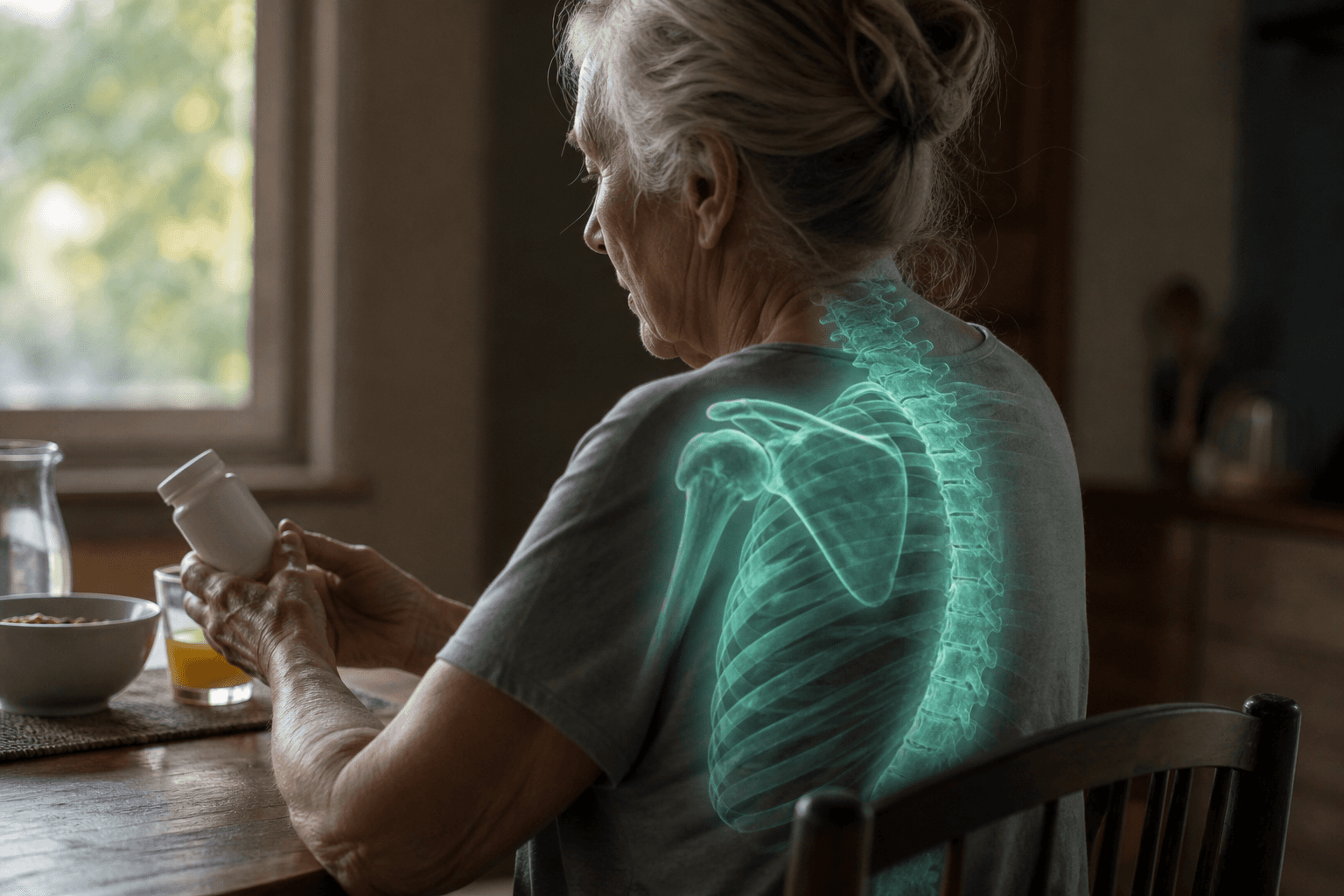
Bone loss can progress for years without any noticeable symptom, which is exactly why osteoporosis is often only discovered after a fracture has already occurred.
Bone might feel like a fixed, permanent structure, but it's actually one of the most metabolically active tissues in the body, constantly being broken down and rebuilt in a cycle that continues throughout life. Osteoporosis develops when that cycle tips out of balance — bone is broken down faster than it's rebuilt — and because this shift produces no pain, no visible change, and no obvious symptom until a bone actually fractures, it has earned a reputation as a silent condition. Understanding the biology behind that imbalance is what makes prevention strategies make sense, rather than treating them as arbitrary lifestyle advice.
The Constant Remodeling Cycle Behind Bone Strength
Throughout life, specialized cells called osteoclasts break down old bone tissue while other cells, osteoblasts, build new bone to replace it. During childhood and early adulthood, bone-building generally outpaces breakdown, which is how peak bone mass is reached, typically by the late twenties or early thirties. After that point, the balance gradually shifts, and bone density slowly declines with age in nearly everyone. Osteoporosis represents an acceleration of that normal decline to a point where bones become structurally fragile and significantly more prone to fracture from relatively minor falls or, in advanced cases, from everyday movements like bending or coughing.
Why Women Face a Distinct Risk After Menopause
Estrogen plays a substantial role in maintaining the balance between bone breakdown and bone formation, which is why the sharp drop in estrogen during menopause is associated with a period of accelerated bone loss that can last several years. This is a key reason osteoporosis is diagnosed considerably more often in women than in men, and why bone density monitoring is more commonly discussed with women approaching or past menopause. It doesn't mean bone loss in men is unimportant — it simply tends to progress more gradually and is often detected later as a result.
The Nutritional Foundation: Calcium and Vitamin D
Calcium is the primary mineral component of bone, and adequate dietary intake throughout life supports the ongoing remodeling process, though calcium alone isn't sufficient without vitamin D, which enables the body to actually absorb calcium from the digestive tract. Many people, particularly those with limited sun exposure or certain dietary patterns, have lower vitamin D levels than is ideal for bone health, which is one reason a doctor may check levels and discuss dietary sources or supplementation on an individual basis rather than assuming a one-size-fits-all approach is appropriate.
Why Weight-Bearing Exercise Matters More Than People Expect
Bone responds to mechanical stress in a way that's sometimes described as "use it or lose it" — weight-bearing activities like walking, dancing, or resistance training place load on bones that stimulates the bone-building cells to stay active, while prolonged inactivity accelerates bone loss. This is distinct from cardiovascular exercises like swimming or cycling, which offer real health benefits but don't provide the same bone-loading stimulus. Strength and balance training also carry a secondary benefit worth emphasizing: reducing fall risk, since a fracture generally requires both fragile bone and a fall, and addressing balance reduces the second half of that equation.
Lifestyle Factors That Quietly Undermine Bone Density
Smoking is consistently associated with lower bone density, thought to be related to its effects on estrogen metabolism and bone cell activity, while heavy alcohol use interferes with the body's calcium balance and increases fall risk independently. Certain medications, including long-term corticosteroid use, can also accelerate bone loss as a side effect, which is why anyone on extended courses of such medication is often monitored more closely for bone health as part of routine care rather than as an afterthought.
Tip
Weight-bearing exercise a few times a week, combined with adequate calcium and vitamin D intake, is one of the most evidence-supported combinations for slowing age-related bone loss, and starting these habits before major bone loss occurs tends to be more protective than trying to reverse density loss after the fact.
How Osteoporosis Is Actually Detected
Continue reading for free
Create a free account to keep reading — and connect with our trusted partner's licensed doctors whenever you need more than information.
Already have an account?