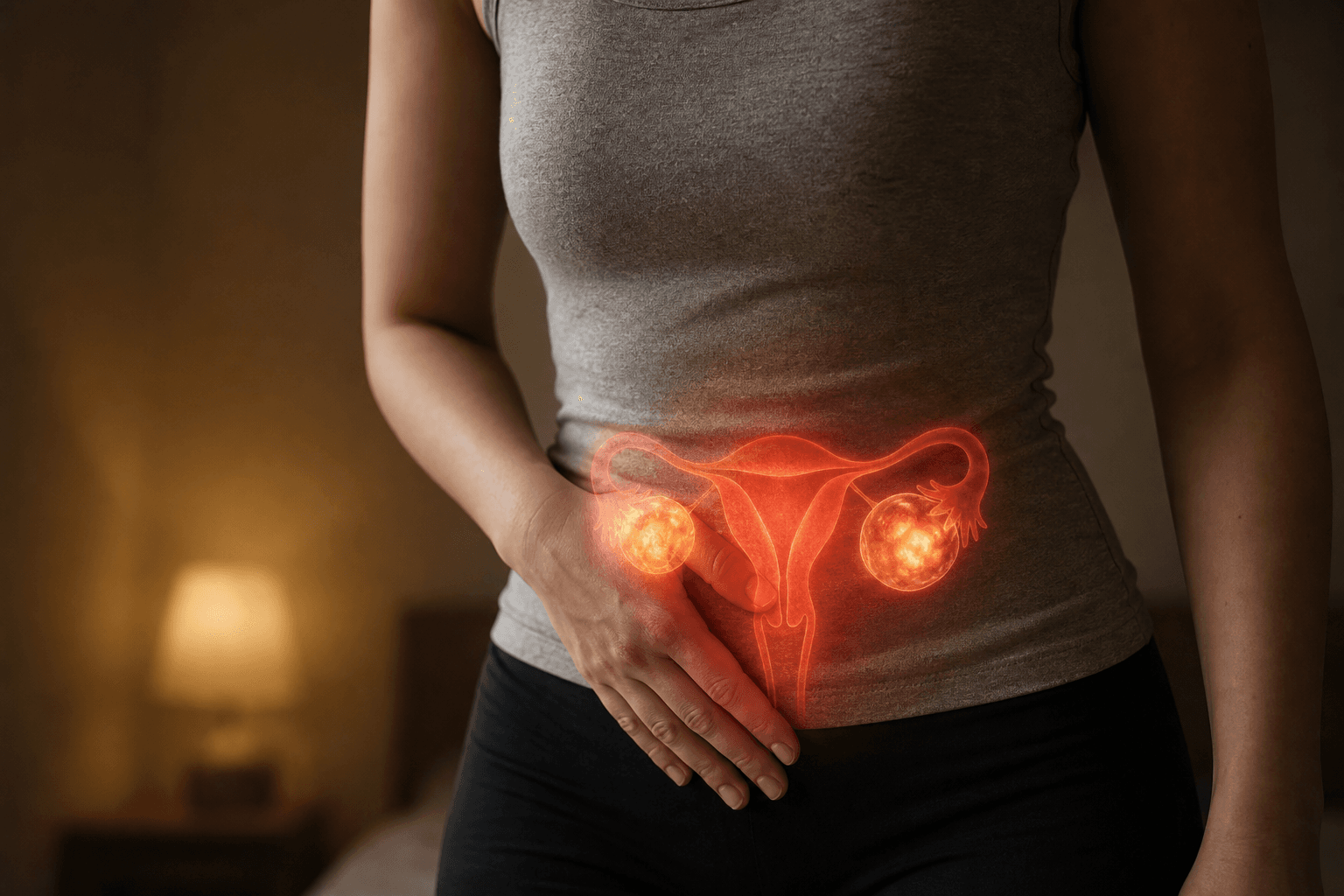

Endometriosis medication generally works by limiting the hormonal signals that drive tissue growth, rather than removing the tissue itself — which explains both how these options help and their trade-offs.
Endometriosis is often talked about primarily in terms of pain, but most medications used to manage it aren't simple painkillers — they work by altering the hormonal environment that allows endometrial-like tissue to grow and respond outside the uterus in the first place. That distinction matters, because it explains why treatment often looks less like taking something for a symptom and more like an ongoing strategy to reduce estrogen's effect on tissue that shouldn't be there.
Why Hormones Are the Primary Target
Endometrial-like tissue outside the uterus generally responds to the same hormonal cycle that governs a normal menstrual cycle, thickening and then breaking down in response to shifts in estrogen and progesterone. Because that tissue can trigger inflammation and scarring wherever it's located, reducing its hormonal stimulation is thought to reduce the underlying activity that drives pain and progression. This is the shared logic behind most medical treatments for endometriosis, even though they achieve it through different specific mechanisms.
Combined Hormonal Contraceptives as a Common Starting Point
Birth control pills, patches, or rings containing both estrogen and progestin are often tried first, partly because they're familiar, generally well tolerated, and can be used continuously — skipping the placebo week — to reduce or eliminate menstrual bleeding altogether. By keeping hormone levels relatively stable rather than cycling, continuous use is thought to reduce the periodic stimulation that would otherwise occur with each cycle. This approach doesn't address existing endometrial tissue directly, but it can meaningfully reduce pain for many people and is generally considered a reasonable starting point given its relatively low side-effect burden compared to more intensive options.
Progestin-Only Therapies
Progestin-only treatments — including certain pills, injections, implants, and hormone-releasing intrauterine devices — work by counteracting estrogen's effect on tissue growth and are often used for people who can't take estrogen-containing options or who haven't found sufficient relief with them. Dienogest, a progestin specifically studied for endometriosis, is thought to both reduce inflammation locally and suppress the hormonal signals driving tissue activity. Side effects vary between formulations but can include irregular bleeding, particularly in the first several months, which is generally expected rather than a sign something is wrong.
GnRH Agonists and Antagonists: A Stronger Hormonal Suppression
For more significant symptoms, doctors may consider gonadotropin-releasing hormone (GnRH) agonists, such as leuprolide, or newer GnRH antagonists, such as elagolix. These work further upstream than contraceptives, reducing the signal from the brain that tells the ovaries to produce estrogen in the first place, which brings estrogen levels down to a range similar to menopause. This is a genuinely more powerful suppression than hormonal contraceptives provide, and it's generally reserved for cases where other options haven't provided adequate relief, given the more pronounced side effects associated with significantly lowered estrogen.
Add-Back Therapy and Long-Term Considerations
Because a very low estrogen state can affect bone density and cause menopause-like symptoms such as hot flashes over time, "add-back" therapy — a small, carefully chosen amount of hormone given alongside a GnRH medication — is often used to offset these effects while largely preserving the treatment's benefit for endometriosis symptoms.
Important
GnRH agonists and antagonists are generally not used for extended periods without monitoring, since prolonged significant estrogen suppression can affect bone density over time.
Anyone on this type of treatment for more than several months should discuss bone health monitoring with their doctor, and should report new or worsening hot flashes, mood changes, or joint discomfort rather than assuming they're simply something to tolerate.
Pain Management Alongside Hormonal Treatment
Nonsteroidal anti-inflammatory drugs (NSAIDs) are frequently used alongside hormonal treatment, particularly during flares, since they address pain and inflammation directly rather than the underlying hormonal drivers. They're generally considered a helpful complement rather than a substitute for hormonal therapy in moderate-to-severe endometriosis, since they don't influence the tissue activity itself. For some people, especially those with milder or intermittent symptoms, a doctor might discuss whether NSAIDs alone, used strategically around expected symptom timing, provide adequate relief before considering hormonal treatment.
Choosing Between Options: A Individualized Process
Continue reading for free
Create a free account to keep reading — and connect with our trusted partner's licensed doctors whenever you need more than information.
Already have an account?