
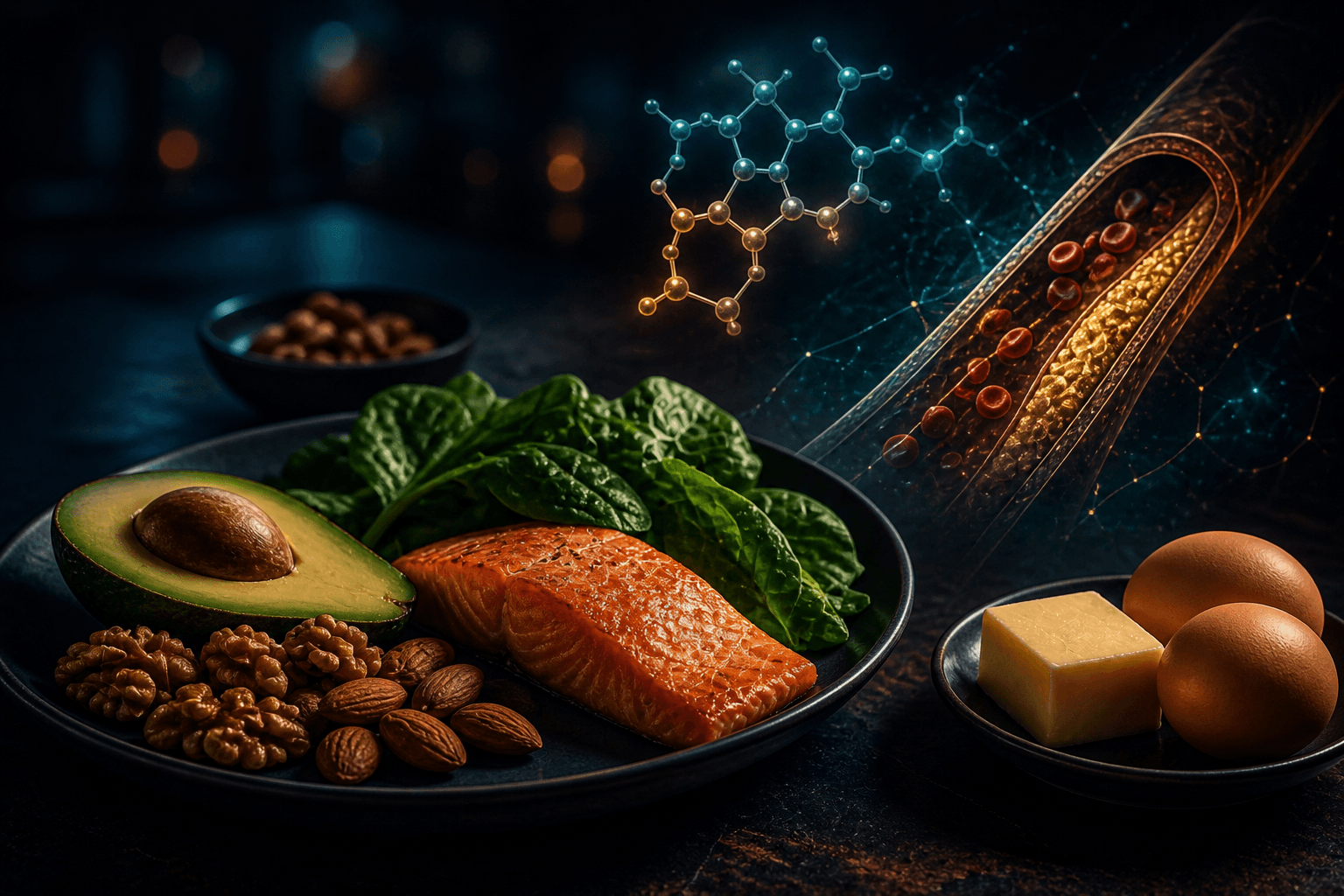
Eggs were vilified for decades over dietary cholesterol, while a genuinely bigger dietary concern got far less attention. Here's what current research actually says about food and cholesterol — and where genetics can outweigh diet entirely.
Cholesterol-related dietary advice has shifted meaningfully over the past couple of decades, and some of the older, once-firmly-stated guidance has aged poorly compared to more recent research. Separating what's actually well-supported from what's outdated or overstated makes for a considerably more useful approach than following advice that hasn't kept pace with the evidence.
The Egg and Dietary Cholesterol Myth
For decades, dietary guidelines placed heavy emphasis on limiting dietary cholesterol directly, with eggs — high in dietary cholesterol — treated as a food to sharply restrict. More recent research has led many guidelines to de-emphasize dietary cholesterol specifically, for a clear physiological reason: for most people, the liver adjusts its own cholesterol production downward in response to higher dietary intake, largely offsetting the effect and meaning dietary cholesterol has a smaller impact on blood cholesterol levels than once believed. This isn't a universal free pass, however — a smaller subset of people, sometimes described as "hyper-responders," do show a more noticeable blood cholesterol increase in response to dietary cholesterol, which is why moderation still remains a reasonable general approach rather than an unlimited allowance.
Saturated Fat vs. Trans Fat: Not the Same Category of Concern
Saturated fat has a real but debated and food-source-dependent effect on LDL cholesterol, with the exact clinical significance varying across different research and different food sources. Trans fat — specifically the artificial, partially hydrogenated oil form — sits in a genuinely different category: the evidence linking it to worse cardiovascular outcomes is clear and consistent enough that many countries have restricted or banned it outright in food products. Treating saturated fat and trans fat as equivalent concerns understates just how much more clearly established the case against trans fat specifically has become.
The Coconut Oil Confusion
Coconut oil has been marketed heavily as a "healthy" fat in recent years, but it's very high in saturated fat, and multiple studies have found it raises LDL cholesterol in a manner broadly similar to other saturated-fat-heavy foods. This is a useful specific example of how "natural" or trendy marketing framing doesn't automatically translate into a heart-healthy choice, independent of what a given food's broader reputation suggests.
Soluble Fiber's Specific, Well-Understood Mechanism
Soluble fiber lowers blood cholesterol through a genuinely specific mechanism: it binds to bile acids in the digestive tract. Since bile acids are made from cholesterol, this binding effectively removes them from circulation, forcing the liver to pull more cholesterol out of the bloodstream to produce replacement bile acids — directly lowering blood cholesterol levels as a result. Oats, beans, and other legumes are among the most practical and well-studied everyday sources of this specific type of fiber.
Why Genetics Can Limit What Diet Alone Can Achieve
Familial hypercholesterolemia is a genetic condition that causes significantly elevated cholesterol regardless of diet quality, due to an inherited defect in how the body clears cholesterol from the blood. This is important context: high cholesterol doesn't always reflect poor dietary choices, and for people with a strong genetic component, diet alone — even an excellent one — often isn't sufficient to bring levels into a healthy range, which is why medication becomes a necessary and appropriate part of treatment for many people regardless of how carefully they eat.
Practical Takeaways With Genuine Evidence Behind Them
Tip
- Moderate rather than eliminate dietary cholesterol sources like eggs, recognizing the effect is real but generally smaller than once assumed for most people.
- Pay closer attention to trans fat specifically, given how much more clearly established its negative effect is compared to saturated fat.
- Don't assume "natural" fats like coconut oil are automatically heart-healthy without checking their actual saturated fat content.
- Incorporate soluble fiber sources like oats, beans, and legumes regularly, given their specific, well-documented cholesterol-lowering mechanism.
- Recognize that a strong genetic component to high cholesterol is real and common, and doesn't mean diet has failed — it means medication may be a necessary and appropriate part of the picture.