
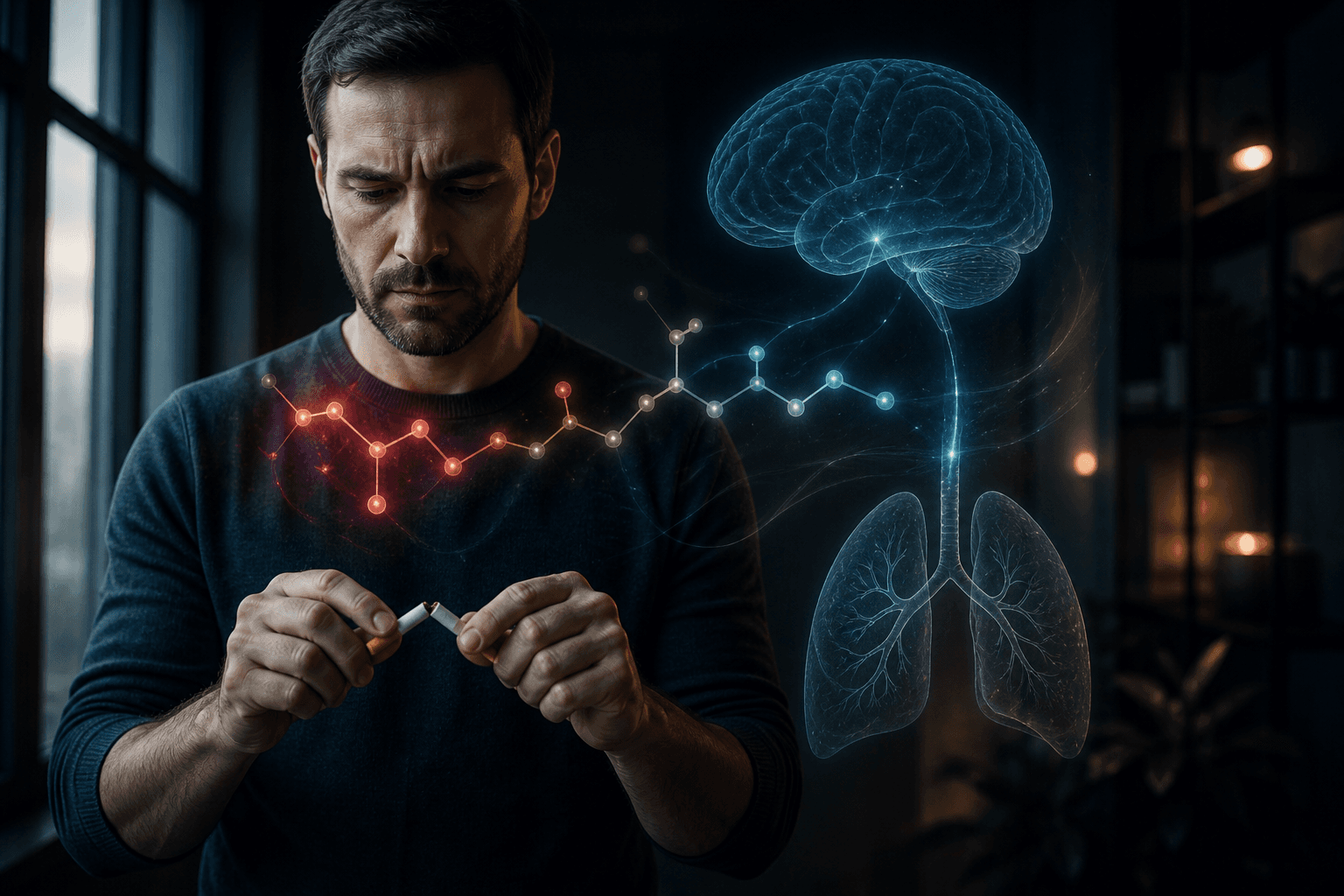
Nicotine cravings have a specific receptor-level explanation, and the withdrawal timeline is more predictable than it feels in the moment. Here's what's actually happening, and why combining tools consistently outperforms willpower alone.
Nicotine cravings can feel like a simple lack of willpower in the moment, but there's a specific, measurable receptor-level reason they happen — and understanding it tends to make the process feel less like a personal failing and more like a predictable, manageable physiological pattern.
The Receptor-Level Reason Nicotine Is So Addictive
Regular nicotine exposure causes the brain to increase the number of nicotinic acetylcholine receptors available — a process called receptor upregulation. Over time, the brain essentially adapts to expect a certain level of nicotine occupying these receptors. When nicotine intake stops, those now-more-numerous receptors are left unoccupied, and that receptor "vacancy," alongside the drop in dopamine activity nicotine normally triggers, is a major driver of the craving and irritability associated with withdrawal — a specific mechanism, not simply a matter of mental toughness.
The Withdrawal Timeline, Realistically
- First few hours: the earliest cravings begin as circulating nicotine starts to clear.
- 24 to 72 hours: physical withdrawal typically peaks, as nicotine and its metabolites are fully cleared from the body — this window is generally the most physically uncomfortable.
- First week: physical symptoms (irritability, difficulty concentrating, restlessness) are usually most intense here before beginning to decline.
- Weeks two to four: physical withdrawal has largely resolved for most people, though psychological and habit-triggered cravings (a specific time of day, a stressful moment, a social situation associated with smoking) continue.
- Following months: occasional triggered cravings can still occur, though considerably weaker and less frequent than in the first weeks — this tail end is often where relapse risk remains highest, precisely because the physical discomfort has passed and vigilance can drop.
Why Unassisted Willpower Alone Tends to Underperform
Quit attempts relying on willpower alone, without any structured support or medication, have a comparatively low long-term success rate — not because the individuals involved lack discipline, but because they're working against the receptor-level and habitual mechanisms described above without any tool addressing them directly. This is precisely why structured approaches, discussed below, consistently show meaningfully better outcomes in research than unassisted attempts.
Nicotine Replacement Therapy
Patches, gum, and lozenges — sold under brand names including Nicorette and NicoDerm — deliver nicotine at a steadier, lower, and more controlled level than cigarettes, without the thousands of other combustion byproducts present in cigarette smoke. This approach reduces withdrawal severity while allowing the behavioral and ritual associations tied to smoking to gradually weaken. Patches are typically used for a steady baseline level throughout the day, while gum or lozenges are often added for breakthrough cravings at specific triggering moments — frequently used in combination rather than one or the other alone.
Varenicline: A Different, Dual Mechanism
Varenicline (sold as Chantix in the US and Champix elsewhere) works differently from nicotine replacement: it's a partial agonist at the same nicotinic receptors nicotine acts on, meaning it occupies and mildly stimulates those receptors — reducing craving and withdrawal — while simultaneously blocking nicotine from a cigarette from producing its usual full rewarding effect if someone does lapse and smoke. This dual action (reducing craving and blunting the reward if a slip occurs) is a distinct mechanism from nicotine replacement and has shown strong effectiveness in clinical trials.
Bupropion: An Antidepressant Repurposed for This Specific Use
Bupropion (sold as Zyban for smoking cessation) was originally developed as an antidepressant and works through dopamine and norepinephrine pathways rather than directly on nicotinic receptors. It's since become a well-established smoking cessation aid in its own right, illustrating a broader pattern seen elsewhere in medicine — a medication developed for one purpose turning out to have a genuinely useful, mechanistically distinct application for another condition entirely.
Why Combining Medication and Behavioral Support Outperforms Either Alone
Across clinical research, combining a pharmacological aid (nicotine replacement, varenicline, or bupropion) with structured behavioral support — counseling, a quit plan, identifying and preparing for specific personal triggers — produces meaningfully higher long-term success rates than either approach used in isolation. This reflects the reality that quitting involves both a physiological craving component and a learned habitual/psychological component, and addressing only one of the two leaves the other unaddressed.
Continue reading for free
Create a free account to keep reading — and connect with our trusted partner's licensed doctors whenever you need more than information.
Already have an account?