
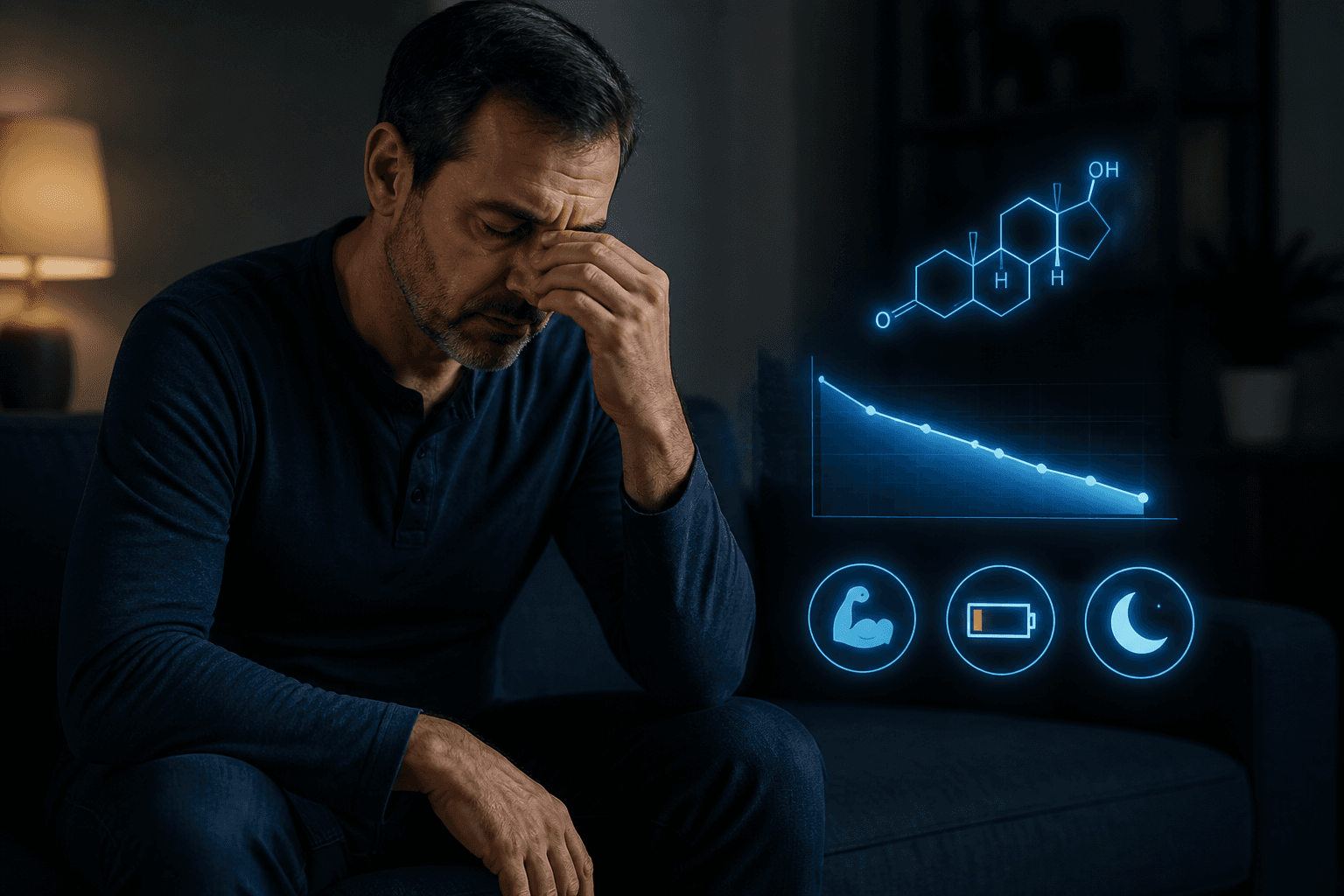
A single low testosterone reading isn't a diagnosis on its own — timing, symptoms, and confirmation testing all matter. Here's how low testosterone is actually identified, what drives it, and where treatment genuinely helps versus where it doesn't.
A single blood test showing a low testosterone number isn't, by itself, a diagnosis of low testosterone. Clinically, it requires two things together: a confirmed low level on proper testing, and symptoms that fit — a distinction that matters a great deal, given how heavily "Low T" is marketed based on a number alone.
Why Testing Timing Changes the Result
Testosterone follows a daily rhythm, peaking in the early morning and declining through the day — sometimes by 20% or more by late afternoon. A test drawn at 3 p.m. can show a level that looks low simply due to timing, even in someone with entirely normal testosterone production. This is why proper testing protocol calls for a morning blood draw, and ideally a second confirmatory test on a separate day, rather than a single afternoon result driving a diagnosis.
Symptoms That Overlap With Several Other Conditions
Fatigue, low mood, reduced muscle mass, and reduced libido are all commonly attributed to low testosterone — and can genuinely be caused by it — but every one of these symptoms is also common in sleep apnea, depression, an underactive thyroid, and simple chronic sleep deprivation. This overlap is exactly why a symptom checklist alone, without confirmed morning bloodwork, isn't sufficient for diagnosis, and why some men pursuing testosterone therapy based on symptoms alone have actually had an entirely different, more directly treatable condition.
What Actually Causes Low Testosterone
Causes are generally grouped into two categories: primary (an issue with the testes themselves) and secondary (an issue with the pituitary gland or hypothalamus, which signal the testes to produce testosterone in the first place). Distinguishing between the two matters for treatment, since it affects which underlying issue — if any — needs its own attention beyond testosterone itself.
The Overlooked Cycle Between Obesity and Low Testosterone
One of the more clinically significant and underappreciated mechanisms involves body fat itself. Fat tissue contains an enzyme (aromatase) that converts testosterone into estrogen. More body fat means more conversion, which lowers circulating testosterone — and lower testosterone, in turn, promotes further fat gain and reduced muscle mass, creating a self-reinforcing cycle that can be difficult to break through either weight loss or hormone treatment alone, without addressing both sides.
How It's Properly Diagnosed
A proper workup includes a morning testosterone level (repeated for confirmation), along with LH and FSH — hormones from the pituitary gland that help distinguish whether the issue originates in the testes or further upstream. Additional testing for related conditions (thyroid function, sleep apnea screening where relevant) is often included specifically because of the symptom overlap described above.
Testosterone Therapy: Benefits and Trade-offs
For men with a confirmed deficiency and consistent symptoms, testosterone replacement therapy can meaningfully improve energy, mood, muscle mass, and libido. It comes with real trade-offs worth understanding beforehand: it suppresses the body's own natural testosterone production and sperm production, which is a significant consideration for men who haven't completed their family planning. It also requires ongoing monitoring — including red blood cell counts, since therapy can increase them, and periodic prostate-related monitoring — managed by a healthcare provider rather than used without supervision.
Non-Hormonal Approaches Worth Trying First in Many Cases
For men whose low testosterone is significantly influenced by excess body fat, poor sleep, or a sedentary lifestyle, addressing those factors directly has, in a meaningful number of cases, produced measurable increases in testosterone without medication — largely by interrupting the fat-tissue conversion cycle described above and improving the hormonal signaling disrupted by poor sleep. This doesn't apply to every case, particularly primary testicular causes, but it's a reasonable and lower-risk starting point for many men, especially those with obesity-related patterns.
Continue reading for free
Create a free account to keep reading — and connect with our trusted partner's licensed doctors whenever you need more than information.
Already have an account?