
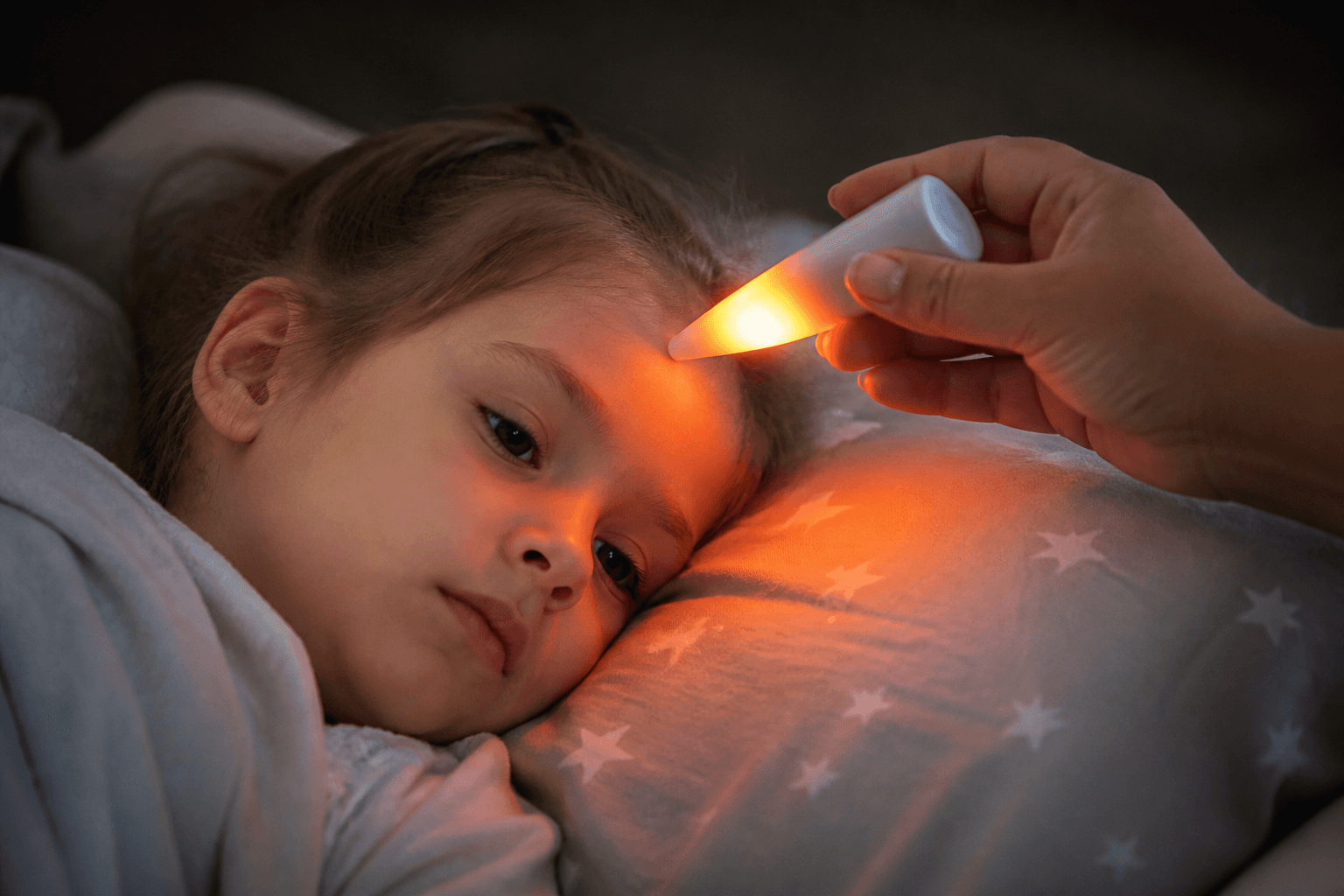
A high number on the thermometer often causes more alarm than the fever itself deserves, since the actual severity of a child's illness depends far more on behavior than on temperature alone.
Few numbers cause as much parental anxiety as a thermometer reading above 38°C, yet fever itself is not the enemy — it's a sign that a child's immune system is doing exactly what it's supposed to do. Understanding what fever actually is, and learning to read a child's overall condition rather than fixating on a single number, tends to be far more useful than any temperature threshold alone.
What Fever Actually Is
Fever is the body deliberately raising its internal temperature in response to infection, triggered by chemical signals that reset the brain's temperature control center. This isn't a malfunction — a higher body temperature is thought to make the environment less favorable for certain viruses and bacteria while also enhancing some immune responses. In practice, this means fever is a symptom reflecting that the immune system has detected something worth responding to, most commonly a viral infection, rather than a condition to be feared or eliminated as quickly as possible.
Why the Number Matters Less Than It Seems
A common misconception is that a higher fever automatically signals a more serious illness. In reality, a child with a relatively modest fever who is lethargic, difficult to rouse, or refusing fluids can be more concerning than a child with a high fever who is alert, drinking normally, and interested in play between bouts of feeling unwell. This is why pediatric guidance consistently emphasizes watching how a child behaves and responds, rather than treating a specific number as an automatic threshold for concern, particularly in children older than three months.
Age Changes the Calculation Considerably
The age of the child meaningfully changes how a fever should be approached. In infants under three months, even a modest fever is treated with more caution, since a young infant's immune system and ability to communicate symptoms are both limited, and infections can progress more quickly in this age group. In older infants and children, the same fever height generally carries less immediate concern, provided the child otherwise seems reasonably well between fever spikes. This age-based distinction is one of the most consistent pieces of guidance pediatricians give, precisely because it reflects real differences in risk rather than arbitrary caution.
Febrile Seizures: Frightening but Usually Not Dangerous
Some young children, generally between six months and five years, can experience a febrile seizure — a brief seizure triggered by a rapid rise in temperature rather than by the fever height itself. These episodes are alarming to witness, but the large majority resolve on their own within a few minutes and don't cause lasting harm, and having one doesn't necessarily predict future neurological problems. That said, any seizure in a child, whether it appears fever-related or not, warrants a prompt medical evaluation to rule out other causes.
Managing Fever at Home
For most children who are otherwise drinking fluids, alert, and not in obvious distress, comfort measures rather than aggressive fever reduction tend to be the focus — dressing a child lightly, keeping the room at a comfortable temperature, and encouraging regular fluid intake to prevent dehydration, which fever can accelerate. Fever-reducing medication is generally guided by how uncomfortable a child seems rather than by chasing a specific temperature, and any medication decisions, including dosing appropriate to a child's weight and age, are best confirmed with a doctor or pharmacist rather than estimated.
Important
A child under three months with any fever, a child of any age with a fever alongside a stiff neck, a rash that doesn't fade under pressure, difficulty breathing, persistent vomiting, signs of dehydration, or unusual drowsiness that doesn't improve, should be seen by a doctor promptly rather than monitored at home.
A fever that persists beyond several days, even without these additional signs, is also worth a medical review to check for an underlying cause that may need attention.
When Fever Signals Something Beyond a Common Virus
The overwhelming majority of childhood fevers are caused by common, self-limited viral infections that resolve without specific treatment. Occasionally, though, fever is the first visible sign of a bacterial infection — an ear infection, urinary tract infection, or pneumonia, among others — which may require a different approach. Distinguishing between these possibilities generally isn't something that can be done reliably from symptoms alone at home, which is part of why a pattern of persistent or recurring fever, or fever accompanied by localized symptoms like ear pain or a productive cough, is worth having assessed.