
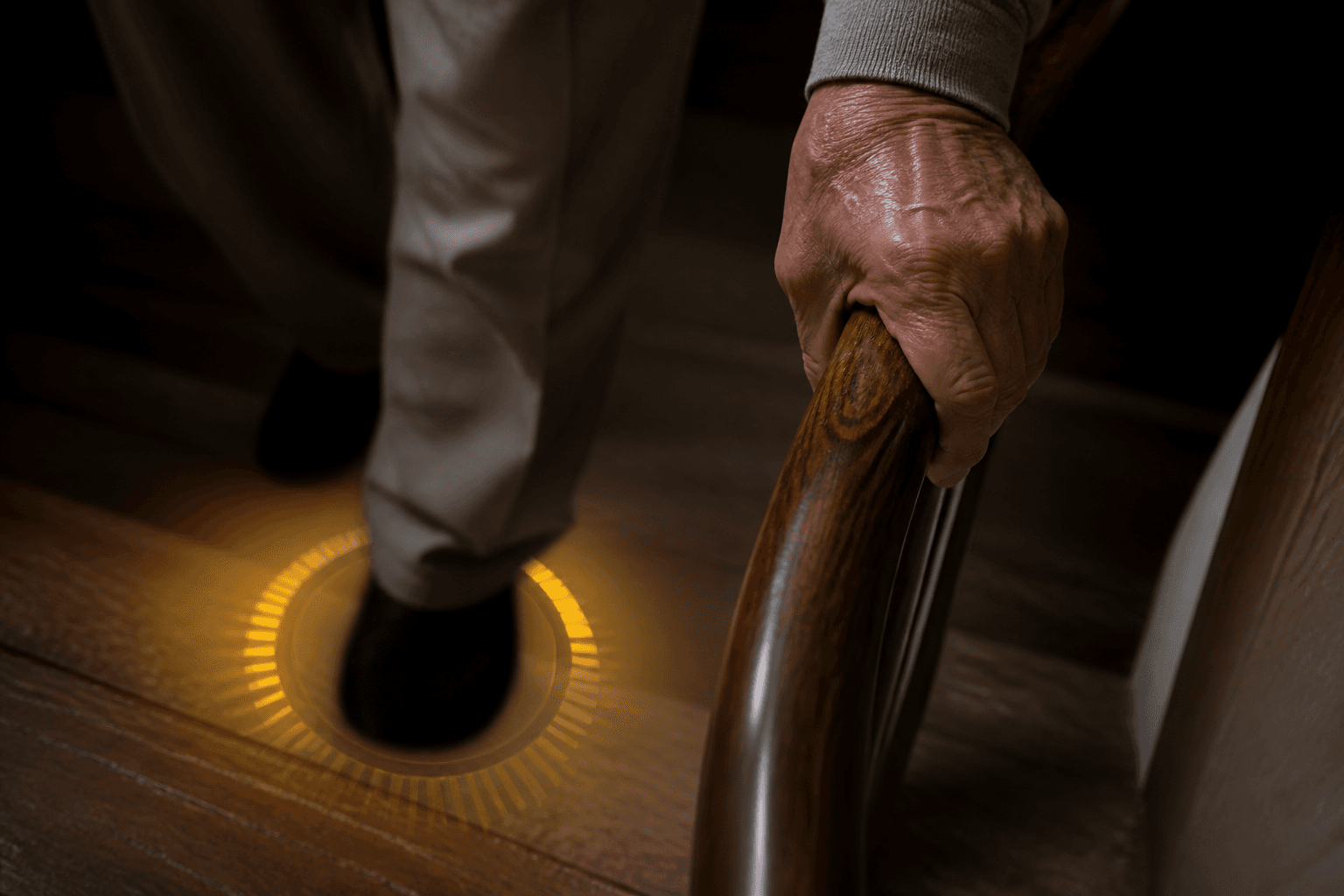
A fall is rarely caused by a single factor — it's usually the result of several small, individually manageable risks lining up at the same moment.
Falls are often discussed as unfortunate accidents, but among older adults, they're rarely random. Research into fall risk consistently shows that falls tend to result from a combination of overlapping factors — a slight balance issue, a medication side effect, dim lighting, and a loose rug, for instance — none of which alone would necessarily cause a fall, but which together create a moment where the margin for error simply runs out. Understanding falls this way, as a convergence of manageable risks rather than bad luck, is what makes prevention genuinely effective rather than a matter of simply being more careful.
Why Fall Risk Increases With Age
Several normal age-related changes contribute to increased fall risk, including gradual declines in muscle strength, slower reflexes, reduced peripheral vision, and changes in the inner ear structures responsible for balance. None of these changes alone is usually dramatic, but together they reduce the body's margin for correcting a stumble before it becomes a fall. This is part of why fall prevention strategies tend to work on multiple fronts simultaneously rather than targeting a single risk factor in isolation.
Medications Are a More Significant Factor Than Most People Realize
Certain medications, particularly those affecting blood pressure, blood sugar, or the nervous system — including some sedatives, antidepressants, and medications for sleep — can contribute to dizziness, drowsiness, or slowed reaction time in ways that meaningfully raise fall risk. Taking multiple medications simultaneously, common among older adults managing several chronic conditions, can compound this risk through interactions that aren't always obvious from looking at any single medication's side effect list. A periodic medication review with a doctor or pharmacist, specifically focused on fall risk rather than just each condition individually, is one of the more evidence-supported and underused prevention steps available.
Vision and Hearing: Underappreciated Contributors
Uncorrected vision problems, including outdated glasses prescriptions or unaddressed cataracts, can meaningfully increase fall risk by making it harder to judge distances, spot uneven surfaces, or navigate low-light environments confidently. Hearing loss has also been linked in research to increased fall risk, thought to relate partly to the inner ear's dual role in hearing and balance, and partly to reduced overall spatial awareness. Regular vision and hearing checks are a low-effort, often-overlooked part of a comprehensive fall prevention approach.
Strength and Balance Training Genuinely Changes Outcomes
Among all fall prevention interventions studied, structured strength and balance exercise programs have some of the strongest supporting evidence, with research consistently showing meaningful reductions in fall rates among older adults who participate regularly. Programs that specifically challenge balance — such as tai chi, or targeted balance and leg-strengthening exercises — appear particularly effective, likely because they directly train the same reflexive stability responses that naturally decline with age. This is a case where the intervention doesn't just reduce risk on paper; it demonstrably improves the physical capacity to catch a stumble before it becomes a fall.
Tip
A simple starting point is a program combining leg-strengthening exercises with balance challenges, done at least twice a week — many community centers and physical therapists offer structured fall-prevention exercise classes specifically designed for older adults.
Making the Home Environment Safer
A large proportion of falls among older adults happen at home, which makes practical home modifications a meaningful part of prevention. Removing loose rugs or securing them firmly, improving lighting in hallways and staircases, installing grab bars in bathrooms, and clearing walkways of clutter and trailing cords are all low-cost changes with a well-documented impact on fall risk. A formal home safety assessment, sometimes conducted by an occupational therapist, can identify specific hazards that aren't always obvious to someone who has lived in the same space for years and has stopped noticing them.
Why a Fall Should Always Prompt a Medical Conversation
Important
Any fall in an older adult, even one that doesn't cause an obvious injury, is worth discussing with a doctor, since a fall can be an early signal of an underlying issue — a new medication side effect, an undiagnosed heart rhythm problem, or a vision change — that hasn't yet been identified.
Head injuries in particular, even without loss of consciousness, warrant prompt medical evaluation, since symptoms of a more serious injury can sometimes take hours or days to become apparent.
Continue reading for free
Create a free account to keep reading — and connect with our trusted partner's licensed doctors whenever you need more than information.
Already have an account?