
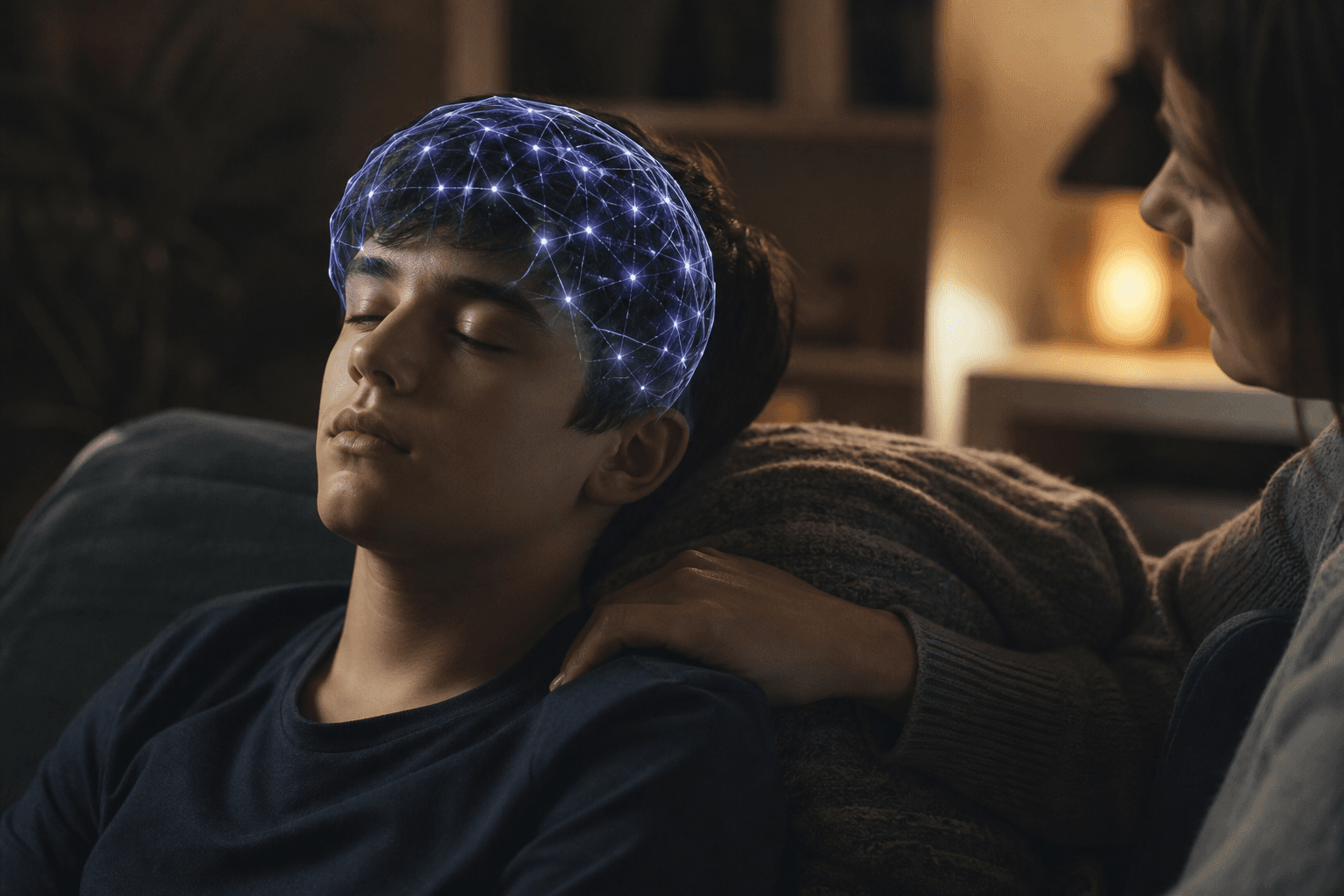
Epilepsy involves a specific pattern of recurring, unprovoked seizures caused by abnormal electrical activity in the brain — and most people with the condition achieve good seizure control with the right medication.
A single seizure doesn't mean someone has epilepsy — fever, extreme sleep deprivation, alcohol withdrawal, or a head injury can all provoke an isolated seizure in someone without any underlying seizure disorder. Epilepsy is specifically defined as a tendency toward recurrent, unprovoked seizures, generally diagnosed after two such seizures occurring more than 24 hours apart without an identifiable acute trigger, or after a single seizure alongside a clear indication (via brain imaging or EEG) that the underlying risk of recurrence is high.
What's Actually Happening During a Seizure
Neurons communicate through carefully regulated electrical impulses, and a seizure occurs when a group of neurons fires in an abnormal, excessive, and synchronized way, disrupting the brain's normal electrical rhythm. What that disruption looks like from the outside depends heavily on where in the brain it starts and how far it spreads. Focal seizures begin in one specific brain region and may cause localized symptoms — a twitching limb, an unusual smell or taste, a sudden wave of fear — sometimes without any loss of awareness at all. Generalized seizures involve both hemispheres from the outset and include the tonic-clonic (convulsive) seizures most people picture when they hear the word "seizure," as well as absence seizures, which involve brief, subtle lapses in awareness that are easy to mistake for daydreaming, particularly in children.
Common Causes Behind Epilepsy
In roughly half of all epilepsy cases, no specific cause is ever identified, which is classified as idiopathic or genetic epilepsy — increasingly, genetic testing is identifying specific gene variants behind cases previously labeled as having no known cause. When a cause is identified, it commonly includes stroke (a leading cause of new-onset epilepsy in older adults), traumatic brain injury, brain tumors, infections affecting the brain such as meningitis or encephalitis, and structural brain abnormalities present from birth or developing later in life. Genetics play a role even in many cases without a single clear structural cause, contributing to an individual's underlying seizure threshold — the point at which abnormal electrical activity tips into a clinical seizure.
Recognizing a Seizure and What to Actually Do
Important
During a convulsive seizure, never place anything in the person's mouth (this is a myth that can cause injury), never restrain their movements, and instead focus on protecting them from nearby hazards, cushioning their head, and gently turning them onto their side once convulsive movements ease, to help keep the airway clear. Call emergency services if the seizure lasts longer than five minutes, if a second seizure follows without the person regaining consciousness in between, if it occurs in water, or if it's the person's first-ever seizure.
Most seizures are self-limiting and resolve within one to three minutes, and the person typically enters a post-seizure (postictal) period involving confusion, fatigue, or headache that can last minutes to hours — this recovery phase is a normal part of the process and shouldn't be mistaken for an ongoing emergency on its own.
How Epilepsy Is Diagnosed
An electroencephalogram (EEG) records the brain's electrical activity and can capture abnormal patterns even between seizures in many people with epilepsy, though a normal EEG doesn't rule out the condition since abnormal activity isn't always present at the moment of testing. Extended or overnight EEG monitoring, sometimes combined with video recording, increases the chance of capturing an actual event. MRI imaging is used to look for structural causes — scarring, tumors, malformations — that might be driving the seizures, and is a standard part of the workup for anyone with new-onset seizures, particularly adults.
Treatment: Medication Is Usually Enough
The majority of people with epilepsy achieve good seizure control — meaning seizure-free or nearly seizure-free — with anti-seizure medication alone. Levetiracetam (Keppra) has become one of the most widely used first-line options due to its relatively favorable side-effect profile and few drug interactions. Other commonly used medications include valproate (Depakine), lamotrigine (Lamictal), and carbamazepine (Tegretol), with the specific choice depending on seizure type, age, sex (valproate is generally avoided in women of childbearing age due to fetal risk when other options are viable), and individual tolerability. For the roughly one-third of people whose seizures don't respond adequately to medication (drug-resistant epilepsy), options including specific dietary therapy, implanted nerve stimulation devices, and, in carefully selected cases, epilepsy surgery to remove or disconnect the seizure-generating brain region can achieve significant improvement.
Living With Epilepsy Day to Day
Most people with well-controlled epilepsy live full, largely unrestricted lives, though certain practical considerations remain relevant — driving regulations typically require a defined seizure-free period before licensing (which varies by country), and sleep deprivation, missed medication doses, and excessive alcohol intake are common, modifiable seizure triggers worth managing proactively. Adherence to prescribed medication, even when someone has felt seizure-free for a long stretch, remains one of the single most important factors in maintaining that control, since stopping medication independently is a well-documented cause of seizure recurrence.