
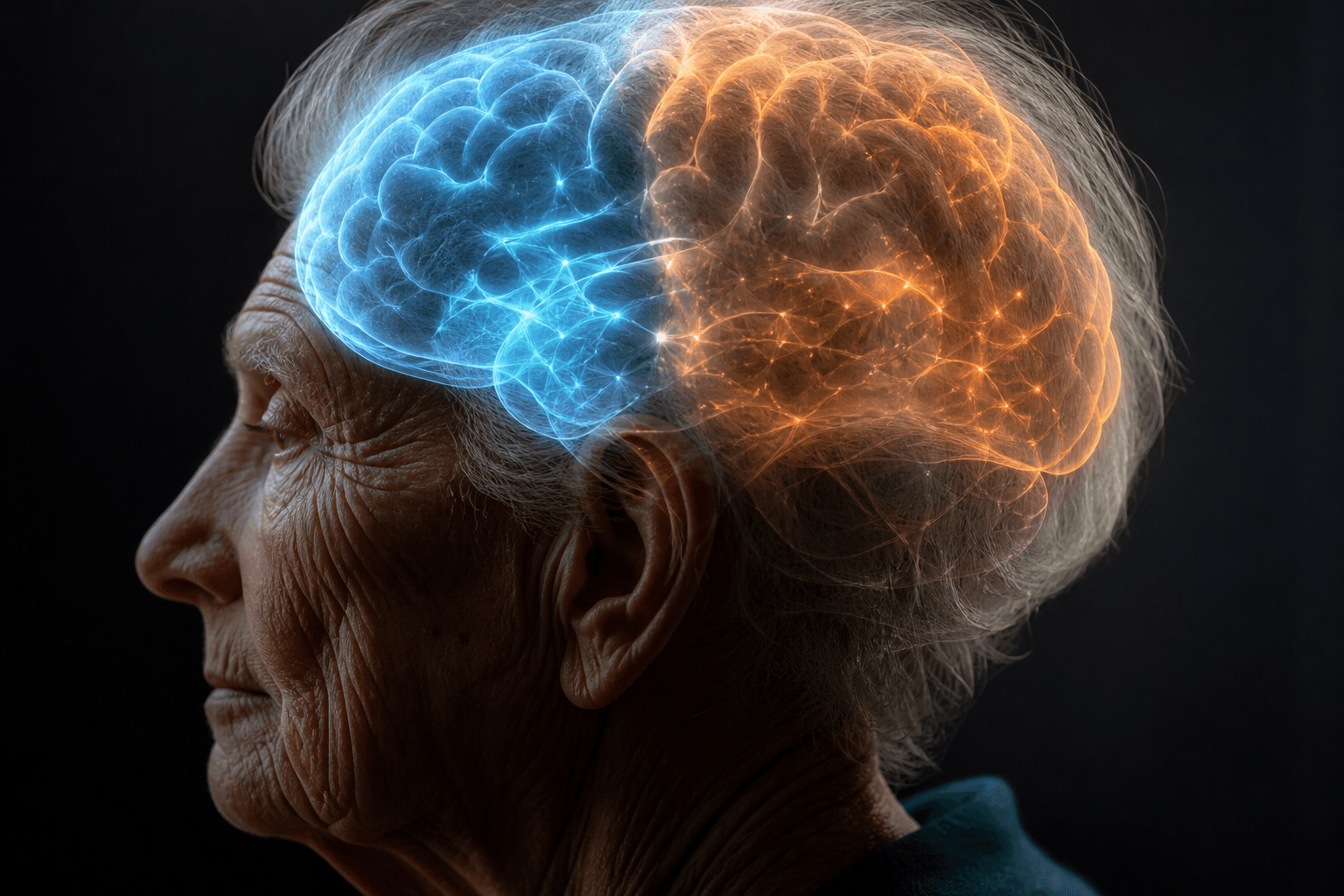
Alzheimer's and dementia are often used as if they mean the same thing, but one is a specific disease and the other is a broad category — a distinction that shapes both diagnosis and outlook.
"Dementia" and "Alzheimer's" are used almost interchangeably in everyday conversation, to the point that many people assume every dementia diagnosis is, functionally, an Alzheimer's diagnosis. The relationship between the two terms is closer to the relationship between "cancer" and "lung cancer" — one is a broad clinical category describing a pattern of symptoms, and the other is a specific, defined disease that happens to be the most common cause behind that category. Understanding the difference clarifies why treatment approaches, expected progression, and even the underlying biology can vary considerably between different dementia diagnoses.
Dementia: A Syndrome, Not a Single Disease
Dementia is an umbrella term describing a syndrome — a collection of symptoms — involving a decline in memory, thinking, reasoning, or other cognitive abilities severe enough to interfere with daily functioning. It's not, by itself, a diagnosis of a specific underlying disease; rather, it describes the clinical pattern that results from any number of different conditions affecting the brain. This is an important distinction because the appropriate evaluation, expected trajectory, and in some cases the treatability of the underlying cause can differ substantially depending on which specific condition is driving the dementia syndrome.
Alzheimer's Disease: The Most Common Underlying Cause
Alzheimer's disease is the single most common cause of dementia, generally estimated to account for somewhere around 60-70% of dementia cases, and it's defined by a specific underlying biology: the abnormal accumulation of amyloid-beta protein plaques between neurons and tau protein tangles within neurons, both of which are thought to progressively disrupt communication between brain cells and eventually lead to cell death. This buildup is thought to begin years, and in some cases over a decade, before symptoms become clinically noticeable, which is part of why researchers are increasingly interested in earlier detection methods and why Alzheimer's-specific diagnostic tests (such as certain PET imaging and cerebrospinal fluid or blood-based biomarkers) are becoming more relevant in clinical evaluation.
Other Major Causes of Dementia
Vascular dementia, generally considered the second most common form, results from reduced blood flow to the brain, often due to a series of small strokes or chronic small-vessel disease, and tends to progress in a more stepwise pattern — periods of stability punctuated by noticeable declines — rather than the gradual, continuous decline more typical of Alzheimer's. Lewy body dementia involves abnormal protein deposits (alpha-synuclein) and is distinguished clinically by early visual hallucinations, pronounced fluctuations in alertness, and movement symptoms overlapping with Parkinson's disease. Frontotemporal dementia, which tends to affect a somewhat younger population than the other types, primarily affects personality, behavior, and language before memory is significantly involved, reflecting its tendency to begin in different brain regions than Alzheimer's typically does. Mixed dementia, involving more than one of these underlying processes simultaneously, is also common, particularly in older adults.
Quick Comparison
| Dementia (umbrella term) | Alzheimer's disease | |
|---|---|---|
| Definition | A syndrome describing significant cognitive decline from any underlying cause | A specific, defined disease and the most common cause of the dementia syndrome |
| Typical progression | Varies considerably by underlying cause (gradual, stepwise, or fluctuating) | Generally gradual and progressive over years |
| Primary cause | Multiple possible causes (vascular, neurodegenerative, and others) | Amyloid-beta plaques and tau protein tangles in the brain |
| Other examples/subtypes | Vascular dementia, Lewy body dementia, frontotemporal dementia, mixed dementia | Not applicable — Alzheimer's is itself one specific subtype of dementia |
Why Getting a Specific Diagnosis Matters
Distinguishing which type of dementia a person has isn't simply an academic exercise, because the underlying cause has real practical implications. Vascular dementia, for instance, is closely tied to cardiovascular risk factors such as high blood pressure, diabetes, and high cholesterol, meaning managing those conditions can play a meaningful role in slowing further vascular damage — a management angle that doesn't apply in the same way to Alzheimer's. Certain medications used for Alzheimer's-related cognitive symptoms may also be less effective, or occasionally contraindicated, in other dementia types, and some causes of cognitive decline that mimic dementia — including thyroid dysfunction, vitamin B12 deficiency, and certain medication side effects — are potentially reversible if identified early, which underscores why a thorough evaluation matters rather than assuming a diagnosis based on symptoms alone.
Recognizing Early Signs Worth Discussing With a Doctor
Important
Frequently repeating questions, becoming disoriented in familiar places, noticeable difficulty with previously routine tasks, and significant personality or mood changes are patterns worth raising with a doctor, since early evaluation allows for identification of potentially reversible causes and earlier access to available treatment and support options.
Occasional forgetfulness — misplacing keys or momentarily forgetting a name — is a normal part of aging and is meaningfully different from the persistent, progressive pattern associated with dementia.
Current Treatment Landscape and Realistic Expectations
Treatment approaches vary by dementia type, but across the board, current medical options generally aim to manage symptoms and, in some cases, modestly slow progression rather than reverse existing damage or cure the underlying condition. Newer disease-modifying therapies for Alzheimer's, targeting amyloid directly, represent a genuinely significant area of ongoing research and clinical development, though their appropriate use, real-world effectiveness, and risk profile are still being actively refined, and a specialist is best placed to discuss whether a specific treatment is appropriate for an individual's situation.