
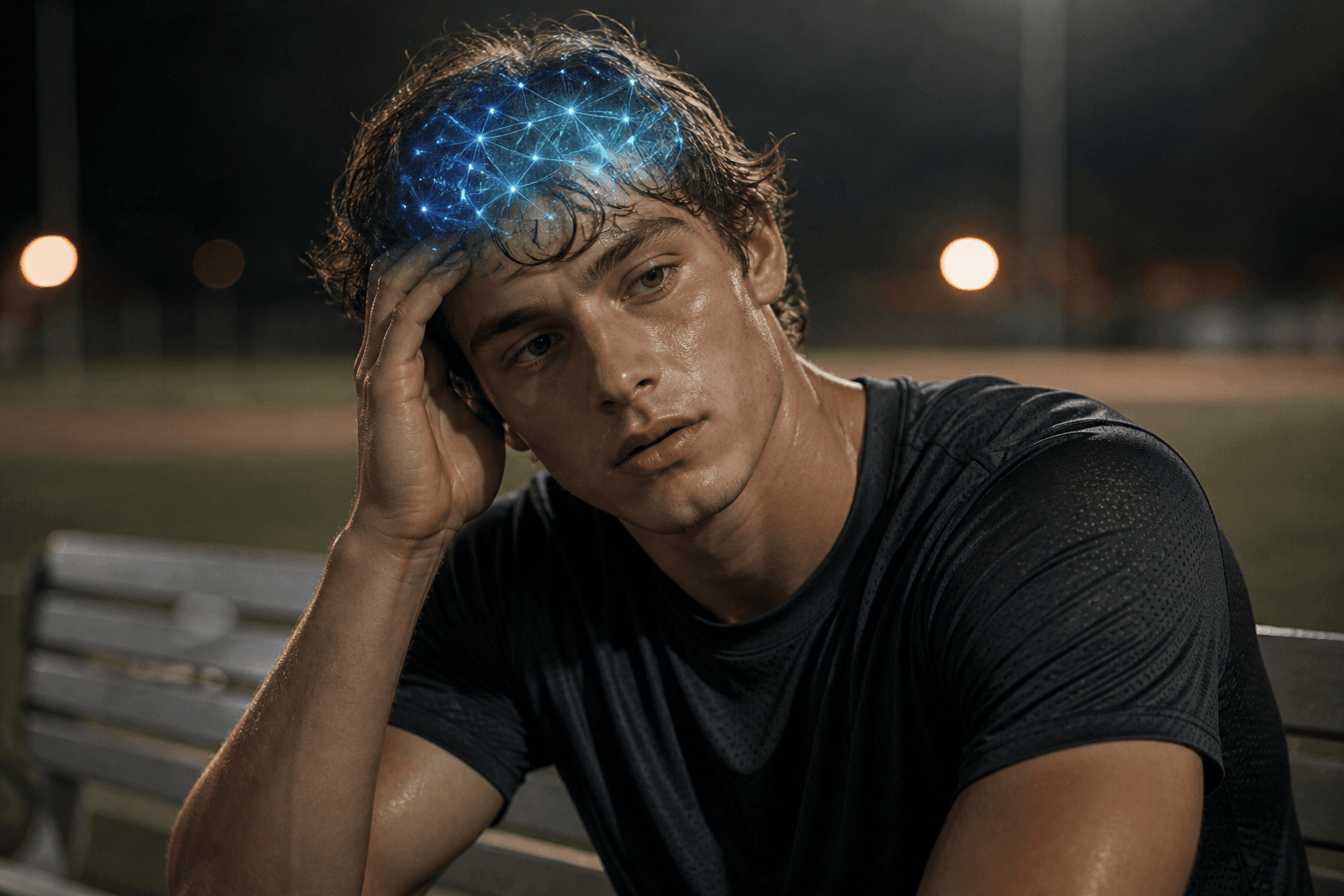
A concussion causes no visible damage on a standard brain scan, yet it disrupts brain function in measurable ways — understanding that mismatch is key to taking the injury as seriously as it deserves.
One of the more counterintuitive facts about concussion is that a standard CT scan or MRI typically looks completely normal afterward, which is exactly why the injury was historically underestimated for so long — no visible bleeding, no fracture, no structural damage that imaging could detect. A concussion is fundamentally a functional injury rather than a structural one, and that distinction is central to understanding why it still causes real, sometimes prolonged, impairment.
What Actually Happens Inside the Brain
A concussion occurs when a sudden force — a direct blow to the head, or a whiplash-type movement that causes the brain to move rapidly within the skull even without direct impact — causes brain cells to stretch and twist at a microscopic level. This triggers a complex cascade: neurotransmitters are released abnormally, cellular metabolism becomes temporarily disrupted, and blood flow to affected brain regions changes, all while the brain simultaneously has an increased demand for energy to repair itself. This creates what's sometimes described as a temporary energy mismatch — the brain needs more fuel than usual precisely while its ability to efficiently generate and use that fuel is impaired, which likely explains why cognitive and physical exertion tend to worsen symptoms during the acute recovery period.
Recognizing the Signs, Which Aren't Always Obvious
Loss of consciousness occurs in only a minority of concussions, which is a common and important misconception — someone doesn't need to have "blacked out" to have sustained a genuine concussion. More common signs include headache, dizziness, confusion or feeling "foggy," nausea, sensitivity to light or noise, difficulty concentrating, and a temporary gap in memory around the event (amnesia). Some symptoms don't appear immediately and instead emerge over the following hours, which is exactly why medical guidance generally recommends observation for a period after any significant head impact rather than assuming the absence of immediate symptoms rules out a concussion entirely.
Important
Worsening headache, repeated vomiting, increasing confusion, slurred speech, weakness or numbness on one side of the body, seizures, or a person becoming increasingly difficult to wake are signs of a more serious brain injury requiring emergency evaluation, not typical concussion symptoms — these warrant an immediate emergency department visit rather than a wait-and-see approach.
Why Rest Alone Isn't the Whole Recovery Strategy Anymore
Concussion management has shifted meaningfully over the past decade. Older guidance recommended strict rest — physical and cognitive — until all symptoms fully resolved, sometimes for extended periods. Current evidence indicates that a brief initial rest period (typically 24 to 48 hours) followed by a gradual, structured return to light activity generally produces better outcomes than prolonged, complete rest, which can actually delay recovery and worsen mood and deconditioning without providing additional benefit. This graduated approach involves progressively reintroducing light physical activity and cognitive tasks (reading, screen time, schoolwork) in stages, stepping back to the previous stage temporarily if symptoms clearly worsen, rather than pushing through symptoms or avoiding all stimulation indefinitely.
Most Concussions Resolve — But the Timeline Varies
Most concussions resolve within one to four weeks, particularly in adults with no prior concussion history and prompt, appropriate initial management. A meaningful minority of people experience persistent post-concussive symptoms — ongoing headaches, difficulty concentrating, sleep disturbance, mood changes — lasting weeks to months beyond the initial injury, which is now managed as a distinct clinical entity requiring more specialized, multidisciplinary care (vestibular therapy, cognitive rehabilitation, and sometimes mental health support, since persistent symptoms and mood changes frequently reinforce each other).
The Real Danger of Repeat Concussions Too Soon
Returning to activities with concussion risk — contact sports, cycling, certain physically demanding jobs — before full recovery carries a specific, serious risk: a second concussion sustained while the brain is still recovering from the first can produce disproportionately severe and prolonged symptoms, a phenomenon sometimes referred to informally as "second impact" risk. This is the core rationale behind structured return-to-play and return-to-work protocols used in sports medicine and occupational health, which require documented symptom resolution and gradual reintroduction of activity before full clearance, rather than relying on how a person subjectively feels on a given day.