An anxiety spike and a panic attack can feel similar in the moment, but they build, peak, and resolve on completely different timelines — and that distinction shapes how each is best managed.
Someone describing "a panic attack at work" and someone describing "really bad anxiety before a meeting" may be pointing to two genuinely different physiological events, even though both involve racing thoughts, a pounding heart, and an urge to escape the situation. The terms are used almost interchangeably in everyday conversation, but clinically they describe distinct patterns — one a sustained state that builds with a source, the other a sudden, self-contained surge that often peaks within minutes regardless of what's actually happening around the person.
Anxiety: A Sustained Response to a Perceived Threat
Anxiety is generally a response to something identifiable, even if the identifiable thing is somewhat vague — an upcoming deadline, a health worry, financial pressure, or a social situation. It tends to build gradually, can persist for hours or days, and generally fluctuates in intensity depending on how the underlying concern evolves. Physically, it often involves muscle tension, a mind that keeps circling back to the same worry, restlessness, and sleep disruption, but the intensity is usually proportional, in some sense, to the situation a person is facing, even when that proportionality feels disconnected from an outside observer's perspective.
Panic Attacks: A Sudden Surge That Peaks Within Minutes
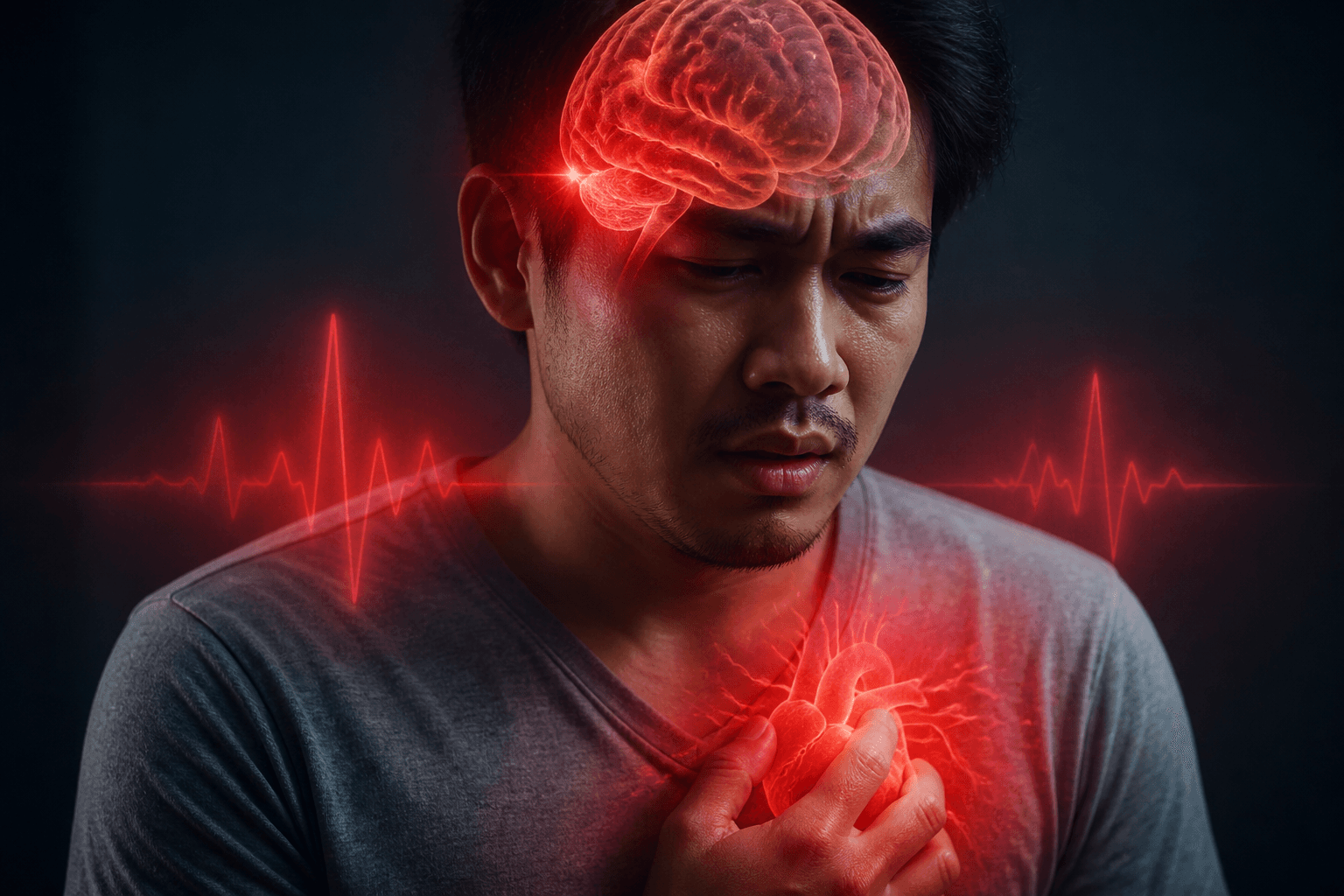
A panic attack, by contrast, is defined clinically by its abruptness and its ceiling: symptoms typically peak within about ten minutes of onset, often arriving with little or no clear external trigger. The physical symptoms are frequently intense enough to be mistaken for a medical emergency — a racing or pounding heart, chest tightness, shortness of breath, dizziness, tingling in the hands or face, and a sense of detachment from reality or from one's own body (depersonalization). Many people experiencing a first panic attack go to an emergency department believing they're having a heart attack, which is a reasonable response given how convincingly the body mimics cardiac symptoms during one.
Why the Body Reacts So Dramatically
Both anxiety and panic attacks involve the sympathetic nervous system's fight-or-flight response, but a panic attack represents a much more abrupt and complete activation of it. Adrenaline floods the system rapidly, redirecting blood flow toward large muscles and away from digestive and other "non-essential" functions, which is part of why nausea, a lump-in-the-throat sensation, or a feeling of unreality often accompany it. This is a genuinely protective evolutionary mechanism firing in a context where there's no actual physical danger to run from, which is precisely what makes the experience so disorienting — the body is behaving exactly as it would during real, immediate danger.
The Fear-of-Fear Cycle
One of the more distinctive features of recurrent panic attacks is the development of a fear-of-fear cycle: after one or two attacks, many people begin anxiously monitoring their body for early warning signs, which paradoxically increases the physiological arousal that can then trigger another attack. This is part of why panic attacks can start to feel unpredictable and "come out of nowhere," even though, from a mechanistic standpoint, the heightened vigilance itself is often contributing to their frequency. Recognizing this cycle is often a meaningful part of psychological treatment approaches such as cognitive behavioral therapy.
When Anxiety or Panic Attacks Warrant Professional Support
Important
If panic attacks are frequent, are accompanied by ongoing worry about having another one, or are leading to avoidance of places or situations, this pattern (sometimes described clinically as panic disorder) generally benefits from a proper evaluation rather than being managed alone.
A doctor can also help rule out other conditions — such as thyroid dysfunction or certain heart rhythm issues — that can produce similar physical symptoms and should be considered, particularly if attacks are new or changing in character.
Practical Approaches During an Episode
Slow, deliberate breathing that lengthens the exhale relative to the inhale can help counteract the rapid, shallow breathing pattern that tends to accompany both anxiety spikes and panic attacks, since that breathing pattern itself perpetuates some of the physical sensations (lightheadedness, tingling) that make the episode feel worse. Grounding techniques — deliberately naming things that can be seen, heard, or felt in the immediate environment — are often used to interrupt the spiral of catastrophic thinking that can accompany a panic attack. These are supportive, in-the-moment tools rather than a substitute for addressing recurring patterns with a healthcare professional when they're frequent enough to affect daily life.