
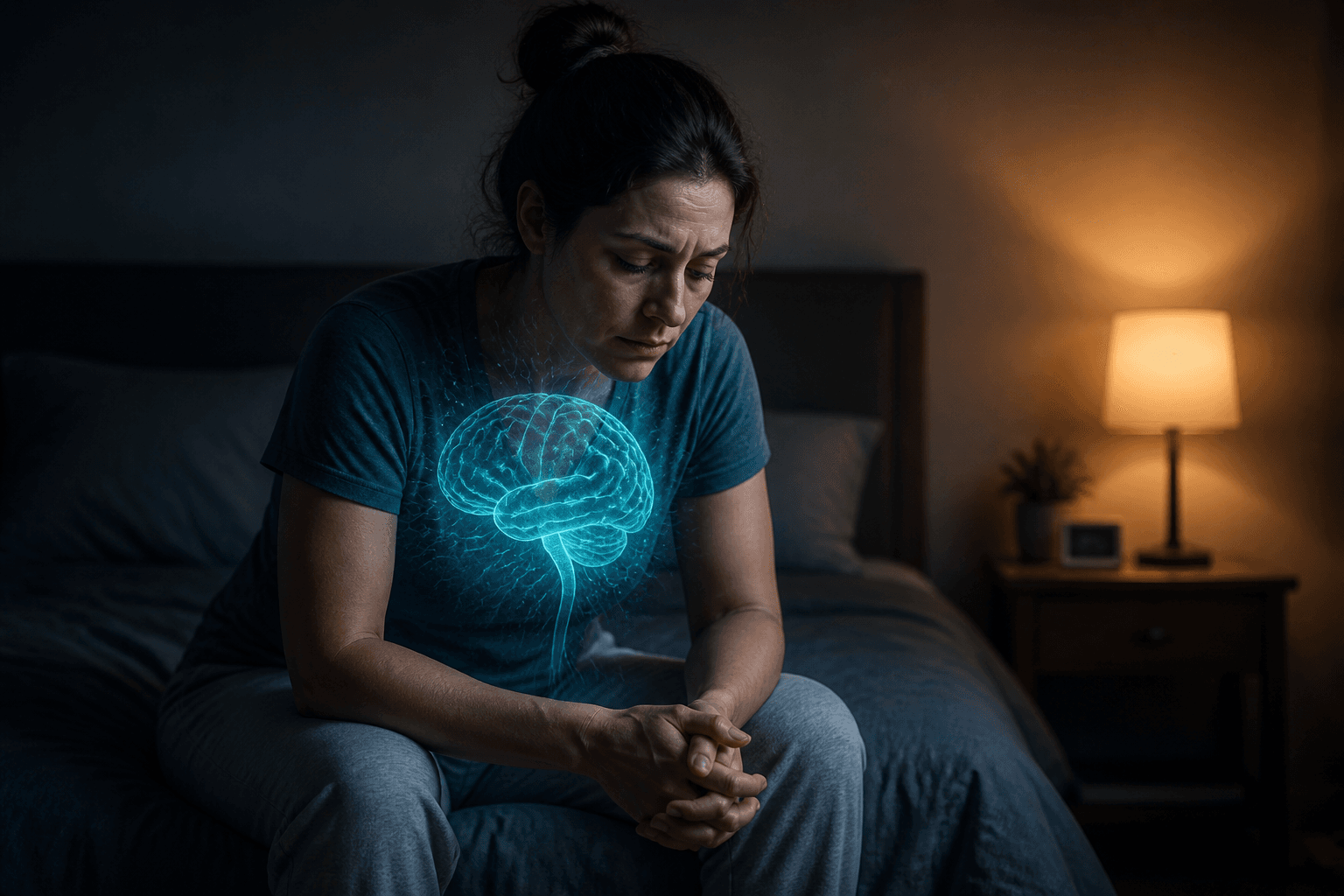
Anxiety disorders are among the most common mental health conditions worldwide, yet they cover several distinct patterns with different triggers, timelines and treatment approaches — not one single experience.
Nearly everyone has felt their stomach tighten before a big presentation or lain awake running through a worry on a loop. What separates that ordinary experience from an anxiety disorder isn't the presence of worry itself — it's the intensity, duration and degree to which it interferes with daily functioning, often persisting long after the situation that triggered it has passed or appearing without any clear trigger at all.
What Counts as an Anxiety Disorder
Anxiety disorders are not a single condition but a family of related diagnoses, each with its own clinical criteria. Generalized anxiety disorder (GAD) involves excessive, difficult-to-control worry about multiple areas of life — work, health, finances, relationships — occurring on most days for six months or more, usually paired with physical symptoms like muscle tension, fatigue and restlessness. Specific phobias involve intense fear tied to a particular object or situation (heights, flying, needles) that's disproportionate to any actual danger. Social anxiety disorder centers on fear of judgment in social or performance situations. Panic disorder involves recurring, unexpected panic attacks along with persistent worry about having another one. Each of these responds somewhat differently to treatment, which is part of why an accurate diagnosis matters more than a general sense of "feeling anxious."
The Biology Behind the Worry
Anxiety disorders involve a combination of genetic predisposition, neurochemistry and life experience rather than a single cause. First-degree relatives of someone with an anxiety disorder have a meaningfully higher likelihood of developing one themselves, pointing to a heritable component. Functionally, anxiety disorders are associated with heightened activity in the amygdala (the brain's threat-detection center) and altered regulation by the prefrontal cortex, alongside imbalances involving neurotransmitters such as serotonin, norepinephrine and GABA. Chronic stress, early adverse experiences, and even gut microbiome composition have all been linked to anxiety vulnerability in different lines of research, which is why treatment tends to work best when it addresses more than one of these layers at once.
Physical Symptoms That Are Easy to Miss
Because anxiety disorders are psychological in origin, their physical symptoms are frequently misattributed to something else entirely. Chronic muscle tension (particularly in the jaw, shoulders and neck), digestive complaints, headaches, a persistent sense of being "on edge," disrupted sleep and unexplained fatigue are all common. Some people spend years cycling through gastroenterologists or cardiologists before an underlying anxiety disorder is identified, particularly when the physical symptoms are more prominent than the subjective sense of worry.
Tip
Keeping a simple log of when physical symptoms occur alongside what was happening that day — a stressful meeting, a sleepless night, a specific worry — can help a clinician spot a pattern that's easy to miss in a single appointment.
Psychotherapy: The First-Line Treatment for Most Anxiety Disorders
Cognitive behavioral therapy (CBT) has the strongest evidence base across nearly every anxiety disorder subtype. It works by identifying distorted thought patterns (catastrophizing, overestimating danger) and gradually testing them against reality, often through structured exposure to the feared situation in a controlled, incremental way. Exposure-based approaches are particularly effective for phobias and social anxiety, while acceptance and commitment therapy (ACT) and mindfulness-based approaches have growing evidence for generalized anxiety specifically. Therapy generally takes weeks to months to show meaningful benefit, which is worth setting realistic expectations around from the outset.
Medication Options and How They're Typically Used
For anxiety disorders significant enough to interfere with daily functioning, medication is often used alongside — not instead of — therapy. Selective serotonin reuptake inhibitors (SSRIs) such as sertraline, escitalopram and paroxetine are generally first-line, alongside SNRIs like venlafaxine and duloxetine; these typically take four to six weeks to reach full effect and are intended for longer-term use. Benzodiazepines such as alprazolam, lorazepam and diazepam act within minutes and can be useful for short-term or situational relief, but their potential for dependence means most prescribing guidelines now favor short, time-limited use rather than daily long-term dosing. Buspirone is sometimes used as a non-habit-forming alternative for generalized anxiety. Beta-blockers like propranolol are occasionally used to blunt the physical symptoms (racing heart, trembling) of performance-related anxiety without affecting the psychological experience directly. Any medication decision, including dosing and duration, should be made individually with a prescribing clinician based on the specific diagnosis and health history.
Lifestyle Factors That Meaningfully Move the Needle
Regular aerobic exercise has evidence comparable to some psychological interventions for mild-to-moderate anxiety, likely through a combination of stress hormone regulation and improved sleep quality. Caffeine and alcohol both have documented, dose-dependent effects on anxiety — caffeine directly stimulates the same physiological arousal pathways involved in anxiety, while alcohol's short-term calming effect is typically followed by rebound anxiety as it clears the system. Sleep deprivation amplifies amygdala reactivity to negative stimuli, which is part of why poor sleep and anxiety tend to reinforce each other in a cycle that's often worth addressing directly rather than treating as background noise.