
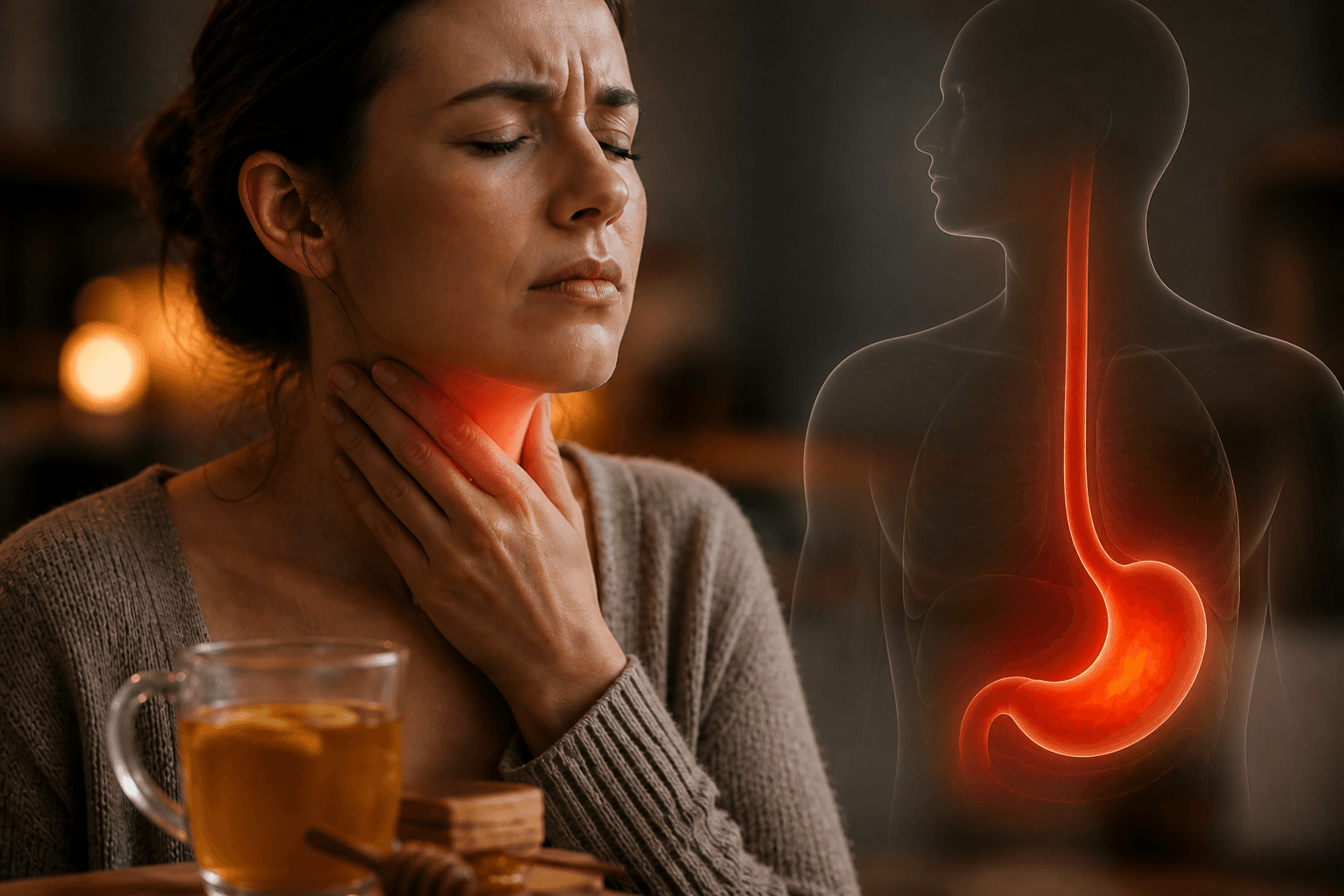
Occasional heartburn and chronic GERD are not the same condition — understanding what separates them explains why some cases need more than diet changes and over-the-counter antacids.
The muscle responsible for keeping stomach acid where it belongs relaxes and tightens without any conscious effort, and it's a brief, mistimed lapse in that same muscle — not excess acid production — that lies behind most reflux episodes. Understanding that distinction is the starting point for making sense of why reflux happens, when it becomes something more than an occasional nuisance, and why treatment options differ so much in how they work.
What Happens in the Body During Acid Reflux
Acid reflux occurs when the lower oesophageal sphincter — a ring of muscle where the oesophagus meets the stomach — relaxes at the wrong moment, allowing stomach contents to move backward into the oesophagus. This muscle is designed to open briefly to let food pass down and then close again, but it also opens transiently at other times, particularly after a large or fatty meal, and it's during these unscheduled relaxations that acid escapes upward. Contrary to a common assumption, most people with reflux don't produce more acid than anyone else; the issue is usually mechanical rather than the stomach being "too acidic".
Common Triggers Behind Frequent Reflux
A number of everyday factors increase how often the lower oesophageal sphincter relaxes inappropriately or increase pressure on it from below. Being overweight, eating large meals, lying down soon after eating, smoking, and drinking alcohol are all associated with more frequent reflux episodes, as are certain foods often reported by patients — including fatty or fried foods, caffeine, chocolate, and mint — though sensitivity to specific foods varies considerably between individuals. Pregnancy is another common trigger, driven partly by hormonal effects on the sphincter and partly by increased abdominal pressure as the pregnancy progresses.
When Occasional Reflux Becomes GERD
Almost everyone experiences heartburn occasionally, and on its own this isn't considered a medical condition requiring treatment. The distinction with gastro-oesophageal reflux disease (GERD) is frequency and impact: reflux symptoms occurring more than twice a week, or symptoms that interfere with sleep, eating, or daily activities, are generally what separates simple occasional heartburn from a pattern worth discussing with a doctor. Left unaddressed over a long period, frequent acid exposure can gradually irritate and, in some cases, damage the lining of the oesophagus, which is part of why persistent symptoms are treated as more than just a passing inconvenience.
Lifestyle Approaches That Make a Measurable Difference
Several practical adjustments have a genuine evidence base behind them rather than being generic wellness advice. Elevating the head of the bed by around 15 to 20 centimetres — rather than simply stacking extra pillows, which can bend the body at the waist and worsen pressure on the stomach — reduces night-time reflux for many people. Avoiding meals within two to three hours of lying down, eating smaller portions more frequently rather than large meals, and reducing or stopping smoking are all changes associated with meaningfully fewer symptoms. Weight loss, where relevant, is also one of the more consistently effective lifestyle measures, since excess abdominal weight increases pressure on the stomach and, in turn, on the sphincter above it.
Medication Options and How They Differ
Three main categories are used for reflux, each working differently. Antacids neutralise acid that has already been produced and act quickly, but only for a short period, making them suited to occasional symptom relief rather than ongoing control. H2 receptor blockers reduce the amount of acid the stomach produces by blocking one of the signals that triggers acid secretion, offering longer relief than antacids. Proton pump inhibitors (PPIs) — such as omeprazole (Prilosec) and esomeprazole (Nexium) — work further along the same pathway, blocking the final step of acid production directly in the stomach lining, and are generally the most effective option for controlling frequent or more severe symptoms — though because of how thoroughly they suppress acid, they are typically used for a defined period under medical guidance rather than indefinitely without review.
When Reflux Symptoms Need Medical Attention
Important
Reflux symptoms that occur more than twice a week, that don't improve with lifestyle changes and occasional over-the-counter antacids, or that are accompanied by difficulty swallowing, unintended weight loss, or persistent vomiting warrant an assessment by a doctor rather than continued self-management.
These features can occasionally point to a cause beyond typical GERD, and a doctor can determine whether further testing, such as an endoscopy, is appropriate.